Quaternary ammonium bonded silica
40-75 μm
70 Å | 480-530 m²/g
6.5% carbon
Permanently charged quaternary amine (pKa > 14)
For acidic drugs, metabolites, and anionic compounds in urine, plasma, and water
Availability: In Stock


Quaternary ammonium bonded silica
40-75 μm
70 Å | 480-530 m²/g
6.5% carbon
Permanently charged quaternary amine (pKa > 14)
For acidic drugs, metabolites, and anionic compounds in urine, plasma, and water
Availability: In Stock
SAX SPE cartridges are strong anion exchange sorbents based on quaternary ammonium bonded silica, designed to selectively retain acidic and anionic compounds from biological and environmental samples.
The permanently charged quaternary amine group provides consistent, high-capacity anion exchange to selectively retain deprotonated acidic compounds. SAX is widely used for extracting acidic drugs, metabolites, carboxylic acids, sulfonates, phosphates, and other anionic analytes from urine, plasma, serum, and water – where reversed-phase sorbents like C18 may exhibit poor retention for ionized acidic compounds.

The primary retention mechanism of SAX is electrostatic (ionic) interaction. The positively charged quaternary ammonium group binds to negatively charged analytes (deprotonated carboxylic acids, sulfonates, phosphates). Under typical loading conditions (neutral to basic pH 6-8), acidic compounds are fully deprotonated and strongly retained.
Unlike weak anion exchangers (WAX), SAX remains fully ionized across the entire pH range (0-14) due to the quaternary amine structure (pKa > 14). This allows method development without concern for pH-dependent charge loss.
Key point: To ensure retention, the sample pH must be at least 2 units above the pKa of your acidic analyte. For carboxylic acids (pKa 4-5), load at pH 7-8.
SAX is preferred for strong acidic analytes, WAX for weak acids requiring pH-dependent selectivity, and C18 for neutral compounds.
| Sorbent | Well – suited for | Primary Interaction | Limitation |
| SAX (quaternary amine) | Strongly acidic compounds (sulfonates, phosphates, carboxylic acids) | Pure ionic (permanently charged) | May retain neutral compounds via hydrophobic interaction in high-organic conditions |
| WAX (weak anion exchange) | Weakly acidic compounds (phenols, enols) | pH-dependent ionic | Requires careful pH control; loses charge at high pH |
| C18 (reversed-phase) | Neutral and non-polar compounds | Hydrophobic only | Poor retention for charged acidic drugs |
Selection guide:
– Choose SAX for strong acidic analytes (e.g., sulfonated dyes, phosphorylated metabolites, carboxylic acid drugs).
– Choose NH2 for weak acids where you want to retain only deprotonated species and wash away neutrals.
– Choose C18 for neutral compounds or when your acidic analytes are not the primary target.
| Industry / Segment | Typical Matrices | Target Analytes |
| Pharmaceutical bioanalysis | Plasma, serum, urine | Acidic APIs, drug metabolites (e.g., NSAIDs, statins, barbiturates), glucuronides |
| Clinical toxicology | Urine, blood | Acidic drugs of abuse (e.g., THC-COOH), barbiturates, salicylates |
| Environmental water testing | Groundwater, surface water, wastewater | Anionic pesticides (e.g., glyphosate, 2,4-D), perfluorinated compounds (PFAS), phosphonates |
| Food safety residue analysis | Meat, milk, honey | Acidic veterinary drug residues (e.g., tetracyclines, quinolones), mycotoxins |
| Industrial & chemical | Process streams, wastewater | Sulfonated dyes, organic acids, anionic surfactants |
Goal: Retain acidic compounds, remove neutrals, elute with acidic or high-ionic-strength solvent.
| Step | Solvent | Purpose | Critical tip |
| Condition | Methanol – water or dilute buffer (pH 6-8) | Activate sorbent | Do not let cartridge dry after conditioning |
| Load | Sample adjusted to pH 6-8 (≥ pKa + 2) | Retain deprotonated acidic analytes | Verify pH with meter; avoid high organic content |
| Wash | Water or dilute buffer (same pH) | Remove neutral interferences | For dirty samples, add 5-10% methanol to wash |
| Elute | 2% formic acid in methanol, or 0.5 M ammonium acetate in 95% methanol/5% water | Displace anions, recover analytes | Collect eluate in low-retention tubes; may need evaporation for LC-MS |
Common failure points:
– Loading pH too low – analyte not deprotonated – breakthrough
– Wash too aggressive (high organic) – loss of weak acids
– Elution solvent too weak (pure methanol) – incomplete recovery
| Problem | Likely Cause | Solution |
| Low recovery | Loading pH too low (analyte not charged); insufficient sorbent; elution solvent too weak | Increase sample pH to ≥ pKa + 2; use larger sorbent mass; elute with 2% formic acid in methanol or 0.5 M ammonium acetate in methanol |
| Breakthrough during load | Insufficient conditioning; flow rate too high; sorbent overloaded | Re-condition with methanol and re-equilibrate; reduce flow rate (≤5 mL/min); use larger sorbent mass |
| Dirty extracts / high background | Wash step too weak (interferences not removed) | Increase wash strength (e.g., add 5-10% methanol to wash); add an additional wash with 2% ammonium hydroxide in water for basic interferences |
| Ion suppression in LC – MS/MS | Matrix overload; co-elution of neutral interferences | Reduce sample equivalent load; add a mixed-mode wash before elution (e.g., 2% ammonium hydroxide in 20% methanol) |
| Poor reproducibility | Inconsistent conditioning or pH variation | Standardize conditioning steps; verify sample pH with meter; use certified SAX cartridges with batch-specific COA |
Select sorbent mass based on your sample volume and matrix complexity.
| Sorbent mass | Reservoir | Best for | Cat# |
| 30 mg | 1 mL | Method development, trace bioanalysis (low sample load) | 15011089 |
| 100 mg | 1 mL | Routine urine/plasma screening (1-2 mL sample) | 15011090 |
| 200 mg | 3 mL | Standard bioanalysis, moderate matrix load | 15011091 |
| 500 mg | 3 mL | Higher loading, dirty matrices (e.g., plasma, wastewater) | 15011092 |
| 200 mg | 6 mL | Low loading but larger reservoir (automation) | 15011093 |
| 500 mg | 6 mL | General purpose, environmental water (100-500 mL) | 15011094 |
| 1 g | 6 mL | High loading, large-volume water (>500 mL), dirty samples | 15011095 |
| 1 g | 12 mL | Large-volume biological fluids, preparative cleanup | 15011096 |
| 2 g | 12 mL | Very high loading, industrial scale | 15011097 |
All formats compatible with standard SPE manifolds, vacuum systems, and automated SPE workstations (Thermo, Horizon, Biotage, etc.).
Download PDF Datasheet
| Parameter | Value |
| Sorbent | Quaternary ammonium bonded silica |
| Functional group | -CH₂-N⁺(CH₃)₃ (permanently charged, pKa > 14) |
| Particle size | 40-75 μm |
| Pore size | 70 Å |
| Surface area | 480-530 m²/g |
| Carbon content | 6.5% |
| Retention mechanism | Strong anion exchange (primary) + mild hydrophobic under high organic |
| pH stability | 0-14 (fully charged across entire range) |
| Max temperature | ≤60°C |
Yes, but weak acids (pKa 7-10) require careful pH control. For loading, the pH must be at least 2 units above the analyte pKa to ensure full deprotonation. For weak acids, consider using WAX (weak anion exchange) which may provide better selectivity.
Load and wash at pH 6-8. This ensures acidic drugs (pKa typically 3-5) are deprotonated and retained. The sorbent remains fully charged across all pH. Elute with acidic organic solvent (e.g., 2% formic acid in methanol) to protonate the analytes and break the ionic bond.
For acidic drugs (e.g., NSAIDs, statins, barbiturates), SAX is superior. It retains deprotonated acids via strong ionic interaction, while C18 provides only weak hydrophobic retention at neutral pH where acids are charged. SAX gives higher and more reproducible recoveries, especially from biological fluids.
Yes. COA including particle size, surface area, and anion exchange capacity verification is available for each production lot.
Yes. Qualified labs can request free SAX cartridges. Email sales@hawach.com with your application and target analytes.
Yes. All our SAX cartridges (1 mL, 3 mL, 6 mL, 12 mL) are compatible with major automated SPE platforms (Thermo, Horizon, Biotage, etc.).
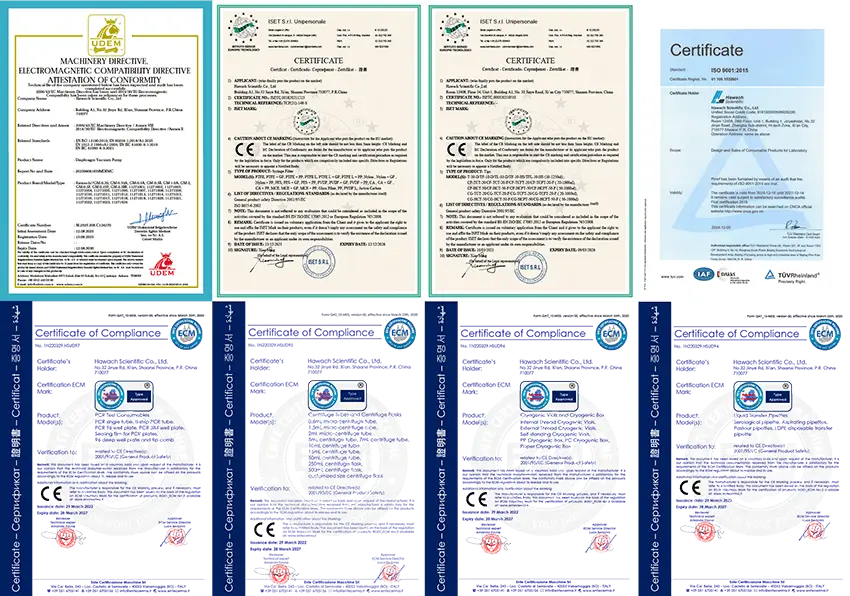

The quality has a guarantee

Fast & safe shipping worldwide


