PPT 96-well Protein Precipitation Filter Plate
350μL, 1mL, 2mL
Availability: In Stock

PPT 96-well Protein Precipitation Filter Plate
350μL, 1mL, 2mL
Availability: In Stock
96-Well Protein Precipitation Plate for High-Throughput Sample Preparation and LC-MS Analysis
Designed for high-throughput removal of proteins from plasma and serum samples prior to LC-MS analysis, this 96-well protein precipitation plate enables consistent and scalable sample preparation in bioanalytical and pharmacokinetic workflows.
As a standardized PPT plate (protein precipitation plate), it supports parallel processing of multiple samples while maintaining reproducible protein removal and clean extract recovery required for analytical accuracy.
It is widely used in bioanalysis, pharmacokinetics, drug discovery, and LC-MS sample preparation workflows.
Plasma or serum sample preparation
Protein precipitation plates are recommended over standard filter plates to avoid clogging and ensure consistent protein removal.
Protein removal plate formats are preferred to reduce matrix interference and improve analytical reproducibility.
96-well PPT plate format is required for parallel processing and automation compatibility.
Precipitation-based cleanup is more reliable than direct filtration for biological matrices.

| Application Area | Recommended Workflow | Key Requirement |
| Bioanalytical sample prep | Organic solvent precipitation + plate-based separation | LC-MS / LC-MS/MS ready samples |
| Pharmacokinetics & drug metabolism | High-throughput protein removal | Reproducible recovery |
| Clinical & research labs | Standardized multi-sample preparation | Sample cleanup before analysis |
| High-throughput screening | Parallel processing of large sample sets | 96-well compatibility |
The protein precipitation plate is used in workflows where protein interference must be removed before analytical detection.
Typical process:
Protein precipitation using organic solvents followed by plate-based separation is a widely adopted standard approach in LC-MS sample preparation workflows.
This process enables efficient removal of protein matrices that may interfere with chromatographic or mass spectrometric analysis.
A protein precipitation plate (PPT plate) combines solvent-based protein denaturation with subsequent filtration, allowing efficient separation of precipitated proteins from the liquid phase.
In contrast, a standard 96-well filter plate relies only on membrane pore size for physical retention and is designed for general clarification rather than protein removal.
Using a standard filter plate for protein precipitation often results in membrane clogging, inconsistent flow, and reduced sample recovery.
The plate is designed for compatibility with standard laboratory automation and high-throughput workflows.
Configuration includes:
This structure ensures reproducible sample handling across large sample batches.
| Parameter | Specification |
| Plate format | 96-well |
| Well volume options | 350 µL / 1 mL / 2 mL |
| Working volume (recommended) | 50–250 µL (350 μL plate) / 100–800 μL (1 mL plate) / 200–1800 μL (2 mL plate) |
| Pore size range | 0.2 – 0.45 μm |
| Filter membrane material | Glass fiber / Polyethylene (PE) |
| Plate material | Polypropylene (PP) |
| Plate dimensions | Standard microplate (approx. 127.8 x 85.5 x 30.6 mm) |
| Processing methods | Vacuum filtration / Centrifugation |
| Typical samples | Plasma, serum, biological fluids |
| Workflow type | High-throughput sample preparation |
| Automation compatibility | Compatible with automated liquid handling systems |
High-throughput processing enables simultaneous preparation of 96 samples
Consistent protein removal improves batch-to-batch reproducibility
Compatible with both vacuum and centrifugation workflows
Reduced manual handling compared with tube-based precipitation
Improved analytical performance by reducing protein interference prior to LC-MS analysis
| Parameter | Plate-Based Method | Tube-Based Method |
| Throughput | High (96 samples) | Low (1 sample at a time) |
| Reproducibility | High (standardized) | Operator dependent |
| Workflow speed | Fast | Slower |
| Automation compatibility | High | Limited |
| Sample handling | Reduced manual steps | Multiple manual transfers |
Compatible with:
| Cat. No. | Well Volume | Pore Size | Membrane | Qty/Pk | Pk/Carton |
| 25012001 | 350 μL | 0.2–0.45 μm | Glass fiber / PE | 2 pcs | 25 pk |
| 25012002 | 1 mL | 0.2–0.45 μm | Glass fiber / PE | 2 pcs | 25 pk |
| 25012003 | 2 mL | 0.2–0.45 μm | Glass fiber / PE | 2 pcs | 25 pk |
Bulk supply, OEM customization including plate color, packaging, and barcode labeling are available upon request.
It is used to remove proteins from biological samples such as plasma and serum prior to LC-MS or LC-MS/MS analysis
Yes, it supports both vacuum manifold and centrifuge processing
Available in 350 µL, 1 mL, and 2 mL well volumes with defined working ranges
Higher throughput, better reproducibility, and reduced manual handling
Yes, it is widely used in bioanalytical and pharmacokinetic workflows
This PPT plate uses solvent-based protein precipitation followed by filtration, while standard filter plates rely only on pore size and are not optimized for protein removal
Yes, available upon request for each production batch
For bulk procurement, OEM projects, or application-specific recommendations, technical support is available.
Bulk supply with stable batch quality
OEM options including labeling and packaging
Fast response within 24 hours
Send your requirements to receive a tailored quotation
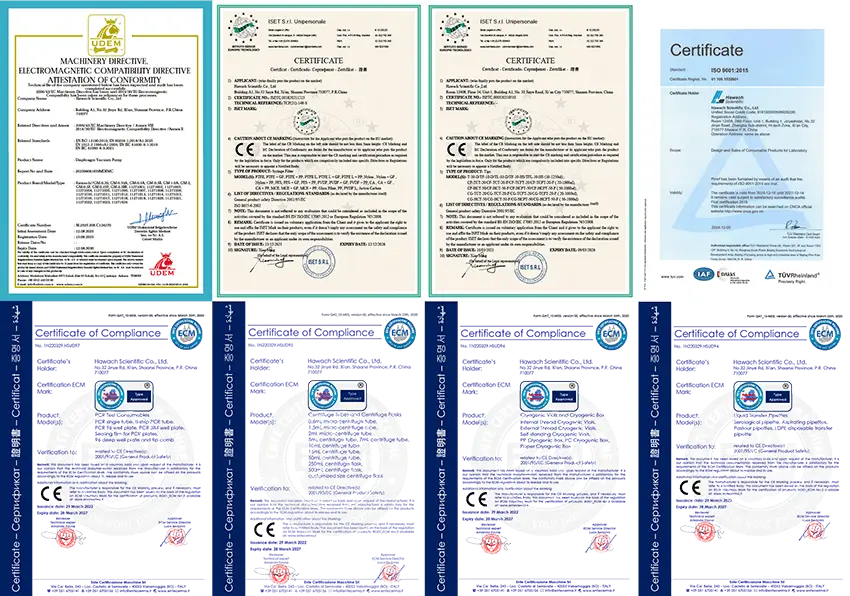

The quality has a guarantee

Fast & safe shipping worldwide


