PS/DVB-SO₃⁻ matrix
40 μm
60 Å
600 m²/g
1.0 meq/g ion exchange capacity
pH 0-14 stable
For alkaline drugs, β-agonists, melamine, and basic metabolites in food, biological fluids, and environmental samples
Availability: In Stock


PS/DVB-SO₃⁻ matrix
40 μm
60 Å
600 m²/g
1.0 meq/g ion exchange capacity
pH 0-14 stable
For alkaline drugs, β-agonists, melamine, and basic metabolites in food, biological fluids, and environmental samples
Availability: In Stock
MCX SPE cartridges are mixed-mode strong cation exchange sorbents combining reversed-phase and ion exchange retention mechanisms.
The sulfonic acid group is covalently bonded to a PS/DVB (polydivinylbenzene) polymer matrix, providing a permanently charged cation exchanger (pKa < 1) with high surface area (600 m²/g). This dual-mode retention allows MCX to effectively extract basic (alkaline) compounds from complex matrices while removing neutral and acidic interferences.
MCX provides two simultaneous retention modes:
| Mechanism | How it works | When it applies |
| Strong cation exchange | The sulfonic acid group (-SO₃⁻) retains positively charged (protonated) basic compounds via ionic interaction | At loading pH ≤ pKa of analyte – 2 (typically pH 2-6) |
| Reversed-phase (hydrophobic) | The PS/DVB polymer matrix retains non-polar to moderately polar compounds via hydrophobic interaction | Always present, especially useful for neutral or partially charged basic compounds |
This mixed-mode design gives MCX superior selectivity for basic drugs compared to single-mode SCX or C18 sorbents. It also provides excellent acid resistance and stability across the entire pH range (0-14), allowing aggressive conditioning and elution conditions.
Key advantage: MCX can remove the majority of phospholipids from biological samples when used with optimized wash conditions.
| Parameter | Value |
| Matrix | PS/DVB (polydivinylbenzene) with covalently bonded sulfonic acid |
| Functional group | -SO₃⁻ (strong cation exchange) |
| Particle size | 40 μm |
| Pore size | 60 Å |
| Surface area | 600 m²/g |
| Ion exchange capacity | 1.0 meq/g |
| pH stability | 0 – 14 (excellent acid resistance) |
| Retention mechanisms | Mixed-mode: cation exchange + reversed-phase |
| Typical applications | Basic drugs, β-agonists, melamine, amphetamines, basic pesticides |
| Sorbent | Matrix | Primary Mechanism | Well – suited for | Key Advantage |
| MCX | PS/DVB-SO₃⁻ | Cation exchange + reversed-phase | Basic drugs, metabolites, melamine, β-agonists | Removes phospholipids; pH 0-14 stable; high capacity |
| SCX | Silica-SO₃⁻ | Strong cation exchange (plus moderate hydrophobic) | General basic compounds | Lower cost but less pH stable; silica matrix |
| C18 | Silica-C18 | Reversed-phase only | Neutral and non-polar compounds | Poor retention for charged basic drugs |
MCX uses a polymer (PS/DVB) matrix instead of silica. This provides:
| Industry / Segment | Typical Matrices | Target Analytes |
| Food safety | Milk powder, dairy products, meat, feed | Melamine, β-agonists (clenbuterol, ractopamine, salbutamol), sulfonamides |
| Clinical & forensic toxicology | Urine, plasma, blood, tissue homogenate | Amphetamines, opiates, cocaine metabolites, benzodiazepines, antidepressants |
| Pharmaceutical bioanalysis | Plasma, serum, urine | Basic APIs, drug metabolites, chlorpheniramine, phenylephrine |
| Environmental monitoring | Surface water, wastewater | Basic pesticides, herbicides, pharmaceutical residues (e.g., propranolol, metoprolol) |
| Biological sample preparation | Bile, tissue homogenate | Basic endogenous compounds, alkaloids |
Goal: Retain basic compounds, remove neutrals and acids, elute with basic organic solvent.
| Step | Solvent | Purpose | Critical tip |
| Condition | Methanol → water or dilute buffer (pH 2-6) | Activate sorbent | Do not let cartridge dry after conditioning |
| Load | Acidified sample (pH 2-6, e.g., 2% formic acid in water) | Retain protonated basic analytes | Ensure sample pH ≤ pKa of analyte – 2 |
| Wash | Water or dilute acid (e.g., 2% formic acid in water) | Remove neutral and acidic interferences | For phospholipid removal, add a wash with 5% ammonium hydroxide in 20% methanol (optional) |
| Elute | 5% ammonium hydroxide in methanol (or 2% NH₄OH in 95% methanol/5% water) | Displace cations, recover basic analytes | Collect eluate in low-retention tubes; may evaporate for reconstitution |
Note for melamine analysis: A dedicated protocol with higher ionic strength elution may be used. Contact technical support for application-specific methods.
| Sorbent mass | Reservoir | Best for | Cat# |
| 30 mg | 1 mL | Method development, trace bioanalysis, low sample volume | 15011149 |
| 60 mg | 1 mL | Routine urine/plasma screening (1-2 mL sample) | 15011150 |
| 30 mg | 3 mL | Larger reservoir for automation, low loading | 15011151 |
| 60 mg | 3 mL | Standard bioanalysis, general purpose | 15011152 |
| 150 mg | 6 mL | Higher loading, dirty matrices (e.g., tissue homogenate) | 15011153 |
| 200 mg | 6 mL | Environmental water (100-500 mL), food extracts | 15011154 |
| 500 mg | 6 mL | High loading, large-volume water (>500 mL), industrial samples | 15011155 |
| 500 mg | 12 mL | Large-volume biological fluids, preparative cleanup | 15011156 |
| 1 g | 12 mL | Very high loading, bulk processing | 15011157 |
All formats compatible with standard SPE manifolds, vacuum systems, and automated SPE workstations (Thermo, Horizon, Biotage, etc.).
Download PDF Datasheet
| Parameter | Value |
| Matrix | PS/DVB-SO₃⁻ (polymer-based) |
| Particle size | 40 μm |
| Pore size | 60 Å |
| Surface area | 600 m²/g |
| Ion exchange capacity | 1.0 meq/g |
| pH stability | 0-14 |
| Recommended loading pH | 2-6 (acidic) |
| Recommended elution solvent | 5% NH₄OH in methanol |
MCX uses a polymer (PS/DVB) matrix with sulfonic acid groups, providing mixed-mode retention (cation exchange + reversed-phase) and excellent pH stability (0-14). SCX is silica-based with only cation exchange and narrower pH range (2-7.5). MCX also offers higher surface area and better phospholipid removal for LC-MS/MS bioanalysis.
Yes. MCX is the standard sorbent for melamine in milk powder and dairy products (e.g., Chinese national standard GB/T 22388). The strong cation exchange retains protonated melamine, while the PS/DVB matrix removes hydrophobic interferences.
Load at pH 2-6. For basic analytes (pKa 8-10), use 2% formic acid in water to ensure full protonation. Do not exceed pH 7 during loading, or basic compounds may lose charge and breakthrough.
Yes. MCX cartridges are designed to remove up to 99% of phospholipids when used with an optimized wash step (e.g., 5% ammonium hydroxide in 20% methanol). This reduces ion suppression and extends LC-MS/MS column lifetime.
Yes. COA including particle size, surface area, and ion exchange capacity verification is available for each production lot.
Yes. All our MCX cartridges (1 mL, 3 mL, 6 mL, 12 mL) are compatible with major automated SPE platforms (Thermo, Horizon, Biotage, etc.).
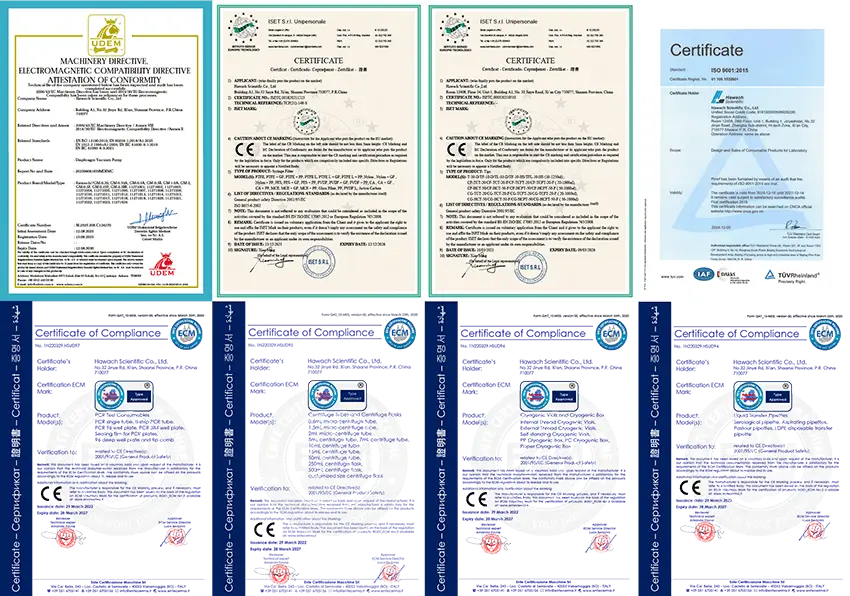

The quality has a guarantee

Fast & safe shipping worldwide


