Glycol-bonded silica
40-75 μm
100 Å
Hydrogen-bond interaction + moderate hydrophobic retentio
For lipid fractionation, biofluid cleanup and polar compound separation
Availability: In Stock


Glycol-bonded silica
40-75 μm
100 Å
Hydrogen-bond interaction + moderate hydrophobic retentio
For lipid fractionation, biofluid cleanup and polar compound separation
Availability: In Stock
Diol SPE cartridges use glycol-bonded silica as a polar stationary phase that combines hydrogen-bond interaction with moderate hydrophobic retention.
Unlike bare silica, the bonded diol layer partially shields residual silanol groups, reducing strong irreversible adsorption commonly observed with unmodified silica phases.
This balanced interaction profile allows Diol SPE cartridges to operate in both normal-phase and reversed-phase modes while providing milder polar retention and improved compatibility for sensitive analytes.
The neutral glycol surface minimizes excessive secondary interaction, making Diol SPE particularly suitable for biological samples, lipid fractionation and mixed-polarity compound cleanup.

Polar compounds are retained through hydrogen bonding and dipole-dipole interaction under non-aqueous solvent conditions. This mode is commonly used for lipid separation, isomer fractionation and polar organic compound cleanup.
Moderately hydrophobic compounds are retained through weak van der Waals interaction from the bonded alkyl structure, allowing aqueous sample loading and biofluid pretreatment workflows.
| Diol SPE | Bare Silica SPE |
| Reduced residual silanol activity | Strong active silanol interaction |
| Milder and more controlled polar retention | May over-retain medium-polarity analytes |
| Lower irreversible adsorption risk | Strong irreversible adsorption possible |
| Compatible with dual retention modes | Primarily normal-phase only |
| Improved recovery for alkaline-sensitive analytes | Potential analyte degradation or loss |
Diol SPE is often selected when bare silica causes excessive analyte retention, unstable recovery or poor compatibility with biological and mixed-polarity samples.
Compared with silica SPE cartridges, Diol phases provide milder polar interaction and reduced irreversible adsorption. For stronger polar retention or weak anion-exchange selectivity, NH2 SPE cartridges may also be considered depending on analyte chemistry and solvent system.
| Parameter | Specification |
| Substrate | High-purity spherical silica |
| Functional Group | Aliphatic diol (glycol) |
| Particle Size | 40-75 μm |
| Pore Size | 100 Å |
| Retention Type | Dual-mode (normal-phase / reversed-phase) |
| Primary Interaction | Hydrogen bonding + dipole interaction |
| Secondary Interaction | Weak hydrophobic retention |
| Industry | Application | Typical Targets |
| Bioanalysis | Biofluid drug and metabolite cleanup | Drug metabolites, pharmaceutical compounds, bioactive metabolites |
| Food Safety | Lipid and contaminant fractionation | Mycotoxins, phospholipids, food additives |
| Environmental | Polar organic compound cleanup | Organic contaminants and matrix interferences |
| Fine Chemicals | Isomer and compound purification | Bile acids, structural isomers, oligosaccharides |
| Analytical Laboratories | General normal-phase cleanup | Mixed-polarity analytes |
| Application | Recommended Format |
| Biofluid cleanup | 100-200 mg / 1-3 mL |
| Routine LC-MS preparation | 500 mg / 3 mL |
| Lipid fractionation | 500 mg / 6 mL |
| Preparative cleanup and large-volume extraction | 1-2 g / 6-12 mL |
| Catalog No. | Description | Package |
| 15011008 | Diol SPE, 100 mg / 1 mL | 100 pcs/pk |
| 15011009 | Diol SPE, 200 mg / 3 mL | 50 pcs/pk |
| 15011010 | Diol SPE, 500 mg / 3 mL | 50 pcs/pk |
| 15011011 | Diol SPE, 500 mg / 6 mL | 30 pcs/pk |
| 15011012 | Diol SPE, 1 g / 6 mL | 30 pcs/pk |
| 15011013 | Diol SPE, 1 g / 12 mL | 20 pcs/pk |
| 15011014 | Diol SPE, 2 g / 12 mL | 20 pcs/pk |
Diol SPE cartridges are used for lipid fractionation, biofluid cleanup, isomer separation, metabolite purification and dual-mode normal-phase/reversed-phase sample preparation.
Diol SPE contains bonded glycol groups that reduce active silanol interaction and provide milder polar retention compared with bare silica, improving analyte recovery and reducing irreversible adsorption.
Yes. Diol SPE is widely used for fractionation of triglycerides, phospholipids and related lipid compounds in food, biological and lipidomics workflows.
Yes. The dual-mode retention mechanism supports aqueous sample loading and weak hydrophobic retention for biological and pharmaceutical sample cleanup.
Diol SPE is generally preferred when milder polar interaction, reduced secondary interaction and improved compatibility for sensitive analytes are required.
Yes. Diol SPE cartridges are compatible with LC-MS/MS workflows including biofluid pretreatment, metabolite cleanup and lipid-related analysis.
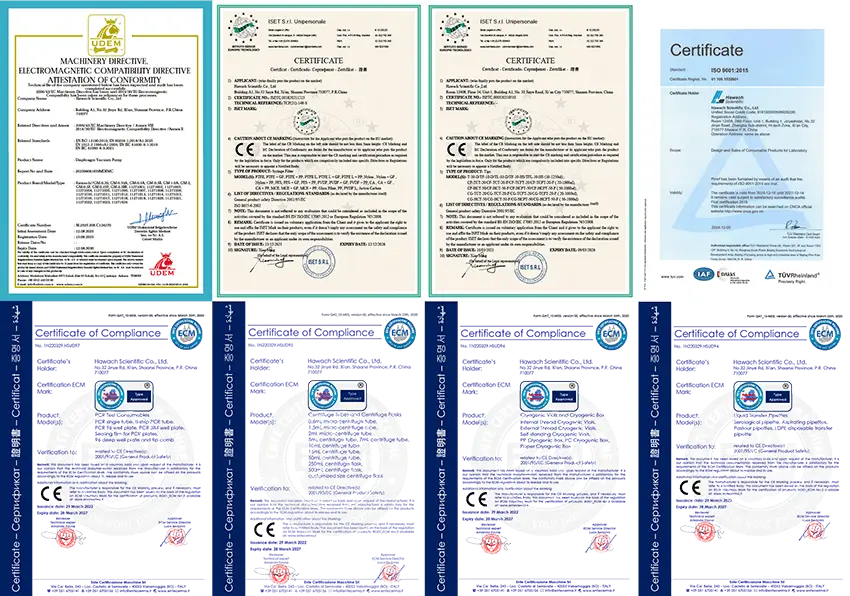

The quality has a guarantee

Fast & safe shipping worldwide


