Grade-41
Equivalent to Whatman Grade 41
Particle Retention: 20-25μm
Product Appearance: Smooth
Filtration Speed: Fast
Ash Content(%): <0.01
Thickness(μm): 215
Basis Weight(g/m2): 84
Wet Burst(psi): 0.3
Availability: In Stock


Grade-41
Equivalent to Whatman Grade 41
Particle Retention: 20-25μm
Product Appearance: Smooth
Filtration Speed: Fast
Ash Content(%): <0.01
Thickness(μm): 215
Basis Weight(g/m2): 84
Wet Burst(psi): 0.3
Availability: In Stock
When filtration speed matters—but analytical stability still cannot be compromised
In many laboratory workflows, delays in filtration are not just operational inconvenience—they directly affect sample throughput, workflow timing, and downstream analytical scheduling.
However, accelerating filtration introduces a critical trade-off: loss of fine particles and reduced gravimetric reliability.
Filter Paper Grade 41 is designed specifically for this balance point: not the finest retention, but the fastest reliable quantitative filtration grade for routine laboratory applications.
Filter Paper Grade 41 is an ashless quantitative cellulose filter paper manufactured from high-purity cotton linters under controlled production conditions.
From a laboratory classification perspective, it belongs to:
It is engineered for workflows where:
With approximately 20 µm nominal retention, Grade 41 is positioned as the high-throughput end of quantitative cellulose filter papers.
In real laboratory environments, filtration media are not judged only by retention specifications. They are judged by process efficiency under real sample loads.
The most common filtration constraints include:
Fine or medium filter papers can significantly slow down workflows involving soil, sediment, or wastewater samples.
Laboratories handling large batch testing require consistent and fast filtration cycles to maintain productivity.
In many routine gravimetric applications, ultra-fine particle retention is not required, and a controlled level of passage is acceptable.
Grade 41 is selected because it prioritizes process speed while maintaining quantitative-grade cleanliness.
Most laboratories do not initially select Grade 41 as their default. It is typically chosen when workflow optimization becomes a priority.
Typical selection scenarios:
In these cases, Grade 41 becomes the high-throughput reference point for balancing efficiency and acceptable analytical performance.
| Parameter | Specification |
| Filter Type | Ashless quantitative cellulose filter paper |
| Particle Retention | ~20 µm |
| Filtration Speed | Fast |
| Ash Content | ≤ 0.01% |
| Material | High-purity cotton linters cellulose |
| Thickness | ~200 µm |
| Basis Weight | ~90 g/m² |
| Functional Role | Fast quantitative filtration medium |
Grade 41 is widely used in workflows where speed and routine analytical consistency are priorities:
Filter paper selection is typically workflow-driven rather than specification-driven:
Grade 41 is commonly used in analytical environments where:
In practical laboratory operations, filtration speed directly influences workflow efficiency, making Grade 41 a key optimization tool in routine testing environments.
| Manufacturer | Equivalent Grade |
| Hawach | Grade 41 |
| Whatman | Grade 41 |
| Advantec | No. 41 |
| Munktell | 389 |
| Ahlstrom | 75 |
| Macherey-Nagel | 641d |
| Cat# | Description | Equivalent to Whatman | Package(pcs/pk) |
| 22011207 | Grade 41, Fast, 20-25um, 70mm | 1441-070 | 100pcs/pk |
| 22011208 | Grade 41, Fast, 20-25um, 90mm | 1441-090 | 100pcs/pk |
| 22011209 | Grade 41, Fast, 20-25um, 110mm | 1441-110 | 100pcs/pk |
| 22011210 | Grade 41, Fast, 20-25um, 125mm | 1441-125 | 100pcs/pk |
| 22011211 | Grade 41, Fast, 20-25um, 150mm | 1441-150 | 100pcs/pk |
| 22011212 | Grade 41, Fast, 20-25um, 180mm | – | 100pcs/pk |
OEM customization and bulk supply are available for laboratory procurement programs and industrial distribution channels.
Download PDF Datasheet
Because it provides significantly faster filtration speed, making it suitable for high-throughput testing while maintaining ashless quantitative-grade cleanliness.
Compared with finer grades, it has lower fine-particle retention, which may not be suitable for ultra-precise gravimetric or trace particulate analysis.
Yes, for routine gravimetric workflows where moderate retention is acceptable and speed is a priority, while maintaining low ash residue.
Yes. It is widely used to reduce particulate load before ICP, ICP-MS, and AAS analysis to protect analytical systems.
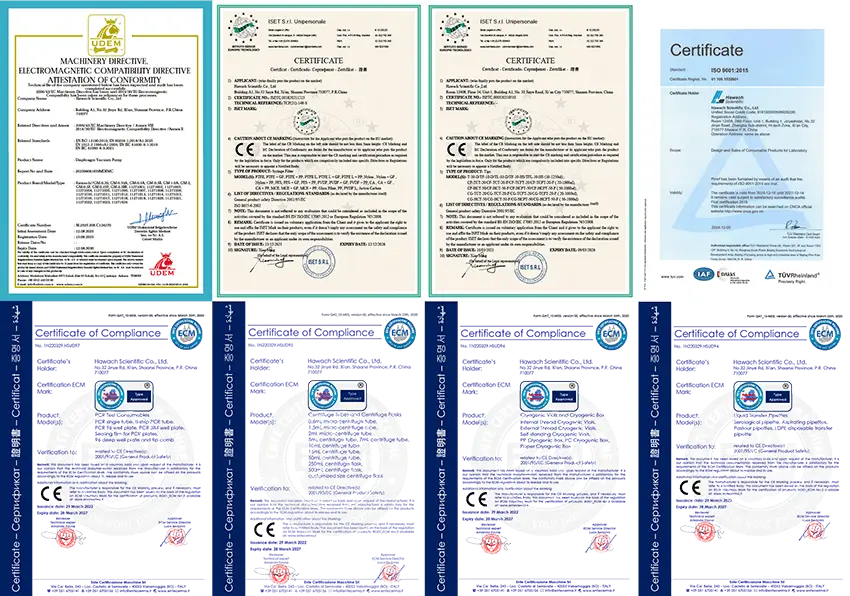

The quality has a guarantee

Fast & safe shipping worldwide


