PS/DVB-NR₃⁺Cl⁻ matrix
40 μm
60 Å
600 m²/g
0.3 meq/g ion exchange capacity
pH 1-14 stable
Availability: In Stock


PS/DVB-NR₃⁺Cl⁻ matrix
40 μm
60 Å
600 m²/g
0.3 meq/g ion exchange capacity
pH 1-14 stable
Availability: In Stock
For acidic drugs, glucuronides, nucleotides, acidic metabolites, and endocrine disruptors
MAX SPE cartridges are mixed-mode strong anion exchange sorbents combining reversed-phase and strong anion exchange retention mechanisms.
The quaternary ammonium salt group is covalently bonded to a PS/DVB (polydivinylbenzene) polymer matrix, providing a permanently charged anion exchanger (pKa > 14) with high surface area (600 m²/g). This dual-mode retention allows MAX to effectively extract acidic (anionic) compounds from complex matrices while removing neutral and basic interferences.
MAX provides two simultaneous retention modes:
| Mechanism | How it works | When it applies |
| Strong anion exchange | The quaternary ammonium group (-NR₃⁺) retains negatively charged (deprotonated) acidic compounds via ionic interaction | At loading pH ≥ pKa of analyte + 2 (typically pH 7-10) |
| Reversed-phase (hydrophobic) | The PS/DVB polymer matrix retains non-polar to moderately polar compounds via hydrophobic interaction | Always present, especially useful for neutral compounds or mixed-mode selectivity |
This mixed-mode design gives MAX superior selectivity for acidic drugs compared to single-mode SAX or C18 sorbents. The polymer matrix also provides excellent acid and base resistance across the entire pH range (1-14), allowing aggressive conditioning and elution conditions.
Key advantage: MAX removes up to 99% of phospholipids and basic interferences from biological samples, reducing ion suppression in LC-MS/MS and extending instrument uptime.
| Parameter | Value |
| Matrix | PS/DVB-NR₃⁺Cl⁻ (polydivinylbenzene with quaternary ammonium) |
| Functional group | Quaternary ammonium (-NR₃⁺), permanently charged |
| Particle size | 40 μm |
| Pore size | 60 Å |
| Surface area | 600 m²/g |
| Ion exchange capacity | 0.3 meq/g |
| pH stability | 1 – 14 |
| Retention mechanisms | Mixed-mode: strong anion exchange + reversed-phase |
| Typical applications | Acidic drugs, estrogens, nucleosides, adenine, acidic pesticides |
| Sorbent | Matrix | Primary Mechanism | Well–suited for | Key Advantage |
| MAX | PS/DVB-NR₃⁺ | Anion exchange + reversed-phase | Acidic compounds, estrogens, nucleosides, anionic metabolites | Polymer matrix; pH 1-14 stable; removes phospholipids |
| SAX | Silica-NR₃⁺ | Strong anion exchange (plus moderate hydrophobic) | Strongly acidic compounds (sulfonates, phosphates) | Lower cost but silica matrix, narrower pH range (2-8) |
| C18 | Silica-C18 | Reversed-phase only | Neutral and non-polar compounds | Poor retention for charged acidic drugs |
MAX uses a polymer (PS/DVB) matrix instead of silica. This provides:
| Industry / Segment | Typical Matrices | Target Analytes |
| Pharmaceutical bioanalysis | Plasma, serum, urine | Acidic APIs (NSAIDs, statins, fibrates), glucuronide metabolites, salicylic acid |
| Clinical & diagnostic | Serum, urine | Estrogens (estrone, estradiol), adenine, nucleosides, uric acid |
| Food safety | Food extracts, plastic products | Acidic pesticides, preservatives (benzoic acid, sorbic acid), synthetic estrogens |
| Environmental monitoring | Surface water, wastewater | Acidic herbicides (2,4-D, MCPA), diclofenac, ibuprofen, triclosan |
| Industrial & plastic analysis | Plastic extracts, polymer leachates | Phthalate metabolites, bisphenol A (acidic forms), antioxidants |
| Nucleoside & nucleotide purification | Biological extracts, fermentation broths | Adenine, guanine, cytidine, uridine, nucleotides |
Goal: Retain acidic compounds, remove neutrals and bases, elute with acidic organic solvent.
| Step | Solvent | Purpose | Critical tip |
| Condition | Methanol – water or dilute buffer (pH 7-9) | Activate sorbent | Do not let cartridge dry after conditioning |
| Load | Sample adjusted to pH 7-10 (≥ pKa of analyte + 2) | Retain deprotonated acidic analytes | Use ammonium hydroxide or ammonium bicarbonate for basic pH |
| Wash | 2% ammonium hydroxide in water, or 5% methanol in water | Remove neutral and basic interferences | For phospholipid removal, add a wash with 5% NH₄OH in 20% methanol |
| Elute | 2% formic acid in methanol (or 5% formic acid in methanol for stronger elution) | Displace anions, recover acidic analytes | Collect eluate; may evaporate for reconstitution |
Note for estrogen analysis: Elute with 5% formic acid in methanol for complete recovery of phenolic estrogens. For nucleosides, use 2% formic acid in 50% methanol.
| Sorbent mass | Reservoir | Best for | Cat# |
| 30 mg | 1 mL | Method development, trace bioanalysis, low sample volume | 15011141 |
| 60 mg | 1 mL | Routine urine/plasma screening (1-2 mL sample) | 15011142 |
| 30 mg | 3 mL | Larger reservoir for automation, low loading | 15011143 |
| 60 mg | 3 mL | Standard bioanalysis, general purpose | 15011144 |
| 150 mg | 6 mL | Higher loading, dirty matrices (e.g., tissue homogenate) | 15011145 |
| 200 mg | 6 mL | Environmental water (100-500 mL), food extracts | 15011146 |
| 500 mg | 6 mL | High loading, large-volume water (>500 mL), industrial samples | 15011147 |
| 1 g | 12 mL | Very high loading, bulk processing | 15011148 |
All formats compatible with standard SPE manifolds, vacuum systems, and automated SPE workstations (Thermo, Horizon, Biotage, etc.).
Download PDF Datasheet
| Parameter | Value |
| Matrix | PS/DVB-NR₃⁺Cl⁻ (polymer-based) |
| Particle size | 40 μm |
| Pore size | 60 Å |
| Surface area | 600 m²/g |
| Ion exchange capacity | 0.3 meq/g |
| pH stability | 1-14 |
| Recommended loading pH | 7-10 (basic) |
| Recommended elution solvent | 2-5% formic acid in methanol |
MAX uses a polymer (PS/DVB) matrix with quaternary ammonium groups, providing mixed-mode retention (anion exchange + reversed-phase) and excellent pH stability (1-14). SAX s silica-based, has narrower pH range (2-8), and lacks the strong hydrophobic retention of the polymer matrix. MAX also offers higher surface area and better phospholipid removal.
Yes. MAX is widely used for extraction of phenolic estrogens (estrone, estradiol, estriol, ethinylestradiol) from water, urine, and food samples. The strong anion exchange retains deprotonated estrogens (pH > 9), and the PS/DVB matrix removes hydrophobic interferences.
Load at pH 7-10. For acidic analytes (pKa 4-6), use pH 8-9 with ammonium hydroxide or ammonium bicarbonate. Ensure sample pH is at least 2 units above the analyte pKa to guarantee full deprotonation and retention.
Yes. MAX cartridges effectively remove phospholipids when used with an optimized wash step (e.g., 5% ammonium hydroxide in 20% methanol). This reduces ion suppression in LC-MS/MS and extends column lifetime.
0.3 meq/g. This moderate capacity is optimized for trace enrichment of acidic analytes while minimizing non-specific binding.
Yes. COA including particle size, surface area, and ion exchange capacity verification is available for each production lot.
Yes. Qualified labs can request free MAX cartridges. Email sales@hawach.com with your application and target analytes.
Yes. All our MAX cartridges (1 mL, 3 mL, 6 mL, 12 mL) are compatible with major automated SPE platforms (Thermo, Horizon, Biotage, etc.).
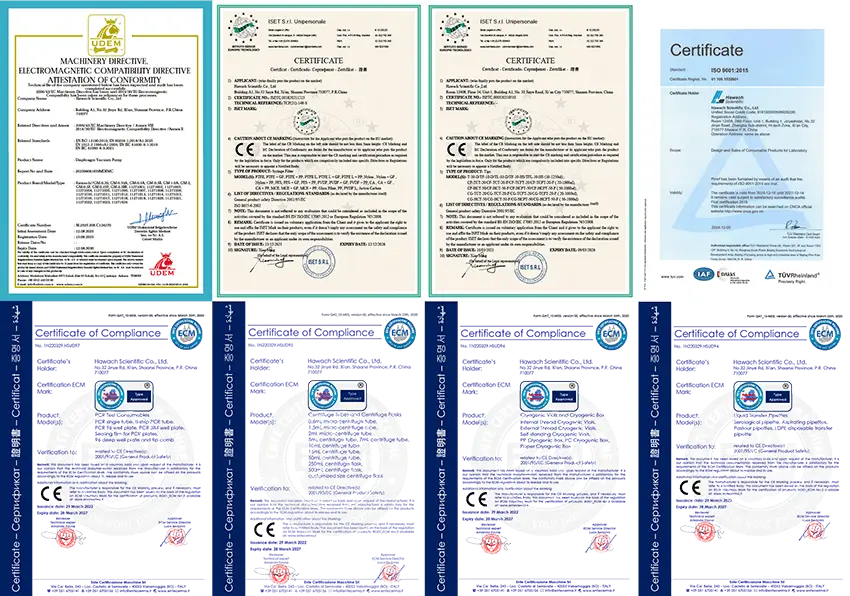

The quality has a guarantee

Fast & safe shipping worldwide


