Ethylenediamine-N-propyl bonded silica
40–75 μm
100 Å
Carbon Content: 8%
Dual amino groups
Stronger ion exchange capacity than NH₂
For removal of fatty acids, organic acids, pigments, sugars and metal ions
Availability: In Stock


Ethylenediamine-N-propyl bonded silica
40–75 μm
100 Å
Carbon Content: 8%
Dual amino groups
Stronger ion exchange capacity than NH₂
For removal of fatty acids, organic acids, pigments, sugars and metal ions
Availability: In Stock
PSA SPE cartridges use ethylenediamine-N-propyl bonded silica containing both primary and secondary amino groups. Compared with standard NH₂ SPE sorbents, PSA phases provide significantly stronger weak anion exchange capacity and improved cleanup efficiency for complex food and biological matrices.
PSA SPE is one of the most widely used cleanup sorbents in QuEChERS pesticide residue analysis because it efficiently removes:
By removing these interfering compounds, PSA SPE cleanup reduces matrix effects in LC-MS/MS and GC-MS analysis, improves analytical sensitivity, and helps maintain stable instrument performance during high-throughput pesticide screening.

| Sorbent | Primary Removal Targets | Best For | Main Limitation |
| PSA | Fatty acids, sugars, organic acids, pigments, metal ions | General QuEChERS cleanup | Less effective for heavy lipid removal than C18 |
| C18 | Lipids, triglycerides, non-polar fats | High-fat food matrices | Limited acidic interference removal |
| GCB | Chlorophyll, carotenoids, pigments | Tea, vegetables, herbs | May retain planar pesticides |
| NH₂ | Mild acidic compounds | General polar cleanup | Lower ion exchange capacity than PSA |
| Silica | Non-polar interferences | Normal-phase cleanup | Not suitable for QuEChERS aqueous extracts |
In many QuEChERS workflows, PSA is combined with C18 SPE sorbents or GCB cleanup sorbents to achieve broader matrix cleanup performance.
Food extracts often contain co-extracted matrix components that interfere with chromatographic separation and ionization efficiency. These matrix compounds can suppress analyte response, contaminate ion sources, and shorten instrument maintenance intervals.
PSA SPE cleanup improves analytical performance by:
This is especially important in high-throughput pesticide residue laboratories running large batches of food extracts daily.
| Parameter | Specification |
| Sorbent | Ethylenediamine-N-propyl bonded silica (PSA) |
| Particle Size | 40–75 μm |
| Pore Size | 100 Å |
| pKa | 10.1 and 10.9 |
| Retention Mechanism | Weak anion exchange + polar adsorption + chelation |
| Primary Applications | Removal of fatty acids, organic acids, pigments, sugars and metal ions |
| Workflow Compatibility | QuEChERS dSPE, cartridge SPE, LC-MS/MS and GC-MS sample cleanup |
| Matrix Type | Typical Interferences Removed |
| Fruits & vegetables | Sugars, organic acids, pigments |
| Avocado & nuts | Fatty acids and oils |
| Edible oils | Lipids and oxidized fatty compounds |
| Tea & herbal extracts | Pigments, polyphenols, chlorophyll |
| Spices | Essential oils and natural pigments |
| Dairy products | Fatty acids and proteins |
| Meat & feed | Lipids and biological matrix interferences |
| Environmental extracts | Humic acids and organic contaminants |
In QuEChERS workflows, PSA sorbent is typically added directly into acetonitrile extracts during dispersive SPE cleanup.
Under slightly acidic conditions, the amino groups become protonated and retain acidic matrix compounds such as fatty acids and organic acids through weak anion exchange interaction. At the same time, the polar amino surface adsorbs sugars and pigments, while the dual amino groups can chelate metal ions.
The resulting extract contains fewer matrix interferences and is better suited for sensitive LC-MS/MS or GC-MS pesticide analysis.
| Cat. No. | Description | Pack |
| 15011098 | PSA SPE, 100 mg / 1 mL | 100 pcs/pk |
| 15011099 | PSA SPE, 200 mg / 3 mL | 50 pcs/pk |
| 15011100 | PSA SPE, 500 mg / 3 mL | 50 pcs/pk |
| 15011101 | PSA SPE, 500 mg / 6 mL | 30 pcs/pk |
| 15011102 | PSA SPE, 1 g / 6 mL | 30 pcs/pk |
| 15011103 | PSA SPE, 1 g / 12 mL | 20 pcs/pk |
| 15011104 | PSA SPE, 2 g / 12 mL | 20 pcs/pk |
Compatible with QuEChERS dSPE tubes, standard SPE manifolds and automated SPE workstations.
Download PDF Datasheet
PSA contains two amino groups and provides higher ion exchange capacity than NH₂ SPE sorbents. PSA also offers improved fatty acid removal and metal ion chelation capability.
PSA efficiently removes fatty acids, sugars, pigments and organic acids from food extracts, reducing matrix effects in pesticide residue analysis.
Yes. PSA SPE cleanup is widely used before LC-MS/MS analysis to improve signal stability and reduce ion source contamination.
Yes. PSA removes many polar pigments and matrix interferences. For heavy chlorophyll removal, PSA is often combined with GCB sorbents.
Yes. PSA effectively removes fatty acids and is frequently combined with C18 sorbents for enhanced lipid cleanup in fatty food extracts.
Yes. OEM cartridge filling, dSPE tube assembly and private label QuEChERS packaging are available.
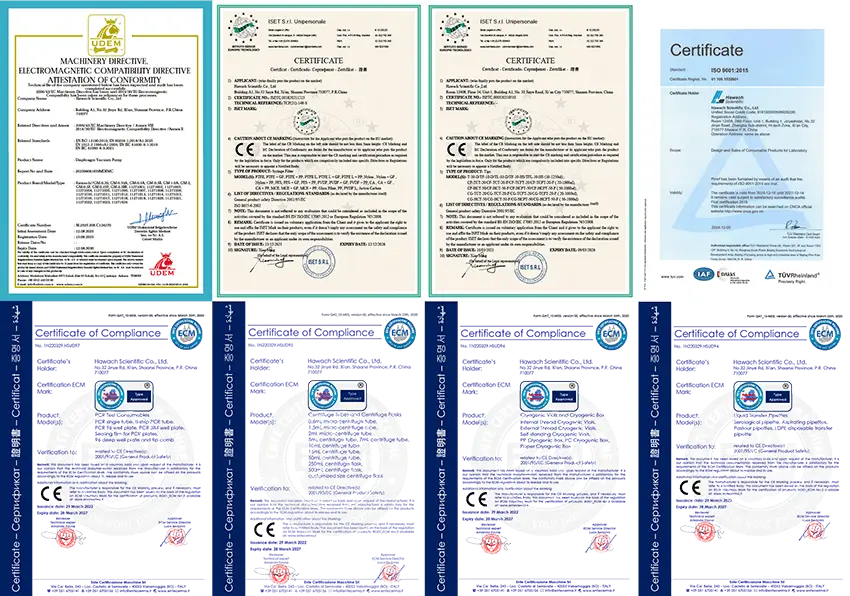

The quality has a guarantee

Fast & safe shipping worldwide


