Grade-42
Equivalent to Whatman Grade 42
Particle Retention: 2.5 μm
Product Appearance: Coarse
Filtration Speed: Slow
Ash Content(%): <0.01
Thickness(μm): 200
Basis Weight(g/m2): 100
Wet Burst(psi): 0.7
Availability: In Stock


Grade-42
Equivalent to Whatman Grade 42
Particle Retention: 2.5 μm
Product Appearance: Coarse
Filtration Speed: Slow
Ash Content(%): <0.01
Thickness(μm): 200
Basis Weight(g/m2): 100
Wet Burst(psi): 0.7
Availability: In Stock
When analytical accuracy depends on capturing the smallest particles
In quantitative laboratory filtration, the most critical errors often do not come from instrumentation or weighing systems. They originate from particle loss during filtration.
Filter Paper Grade 42 is designed for this scenario: it prioritizes maximum retention of fine particles over filtration speed to ensure gravimetric accuracy in high-precision workflows.
Filter Paper Grade 42 is an ashless quantitative cellulose filter paper manufactured from high-purity cotton linters under controlled production conditions.
From a laboratory classification perspective, it belongs to: ultra-fine retention ashless quantitative filtration media.
It is designed for workflows where:
With approximately 2.5 µm nominal retention, Grade 42 represents the finest retention level in standard quantitative cellulose filter paper series.
In real analytical environments, filter paper performance is evaluated by error elimination under fine particulate conditions.
Ultrafine precipitates such as barium sulfate or calcium carbonate can pass through coarser media, leading to underestimation in gravimetric analysis.
Even minimal particle loss becomes significant in high-precision chemical quantification workflows.
Reduced flow rate is an expected trade-off for achieving maximum particle retention and analytical accuracy.
Grade 42 is selected because it minimizes particle breakthrough error in the most demanding gravimetric conditions.
Grade 42 is typically adopted when analytical precision becomes the primary requirement.
In these cases, Grade 42 becomes the maximum retention reference standard.
| Parameter | Specification |
| Filter Type | Ashless quantitative cellulose filter paper |
| Particle Retention | ~2.5 µm |
| Filtration Speed | Slow |
| Ash Content | ≤ 0.01% |
| Material | High-purity cotton linters cellulose |
| Thickness | ~200 µm |
| Basis Weight | ~100 g/m² |
| Functional Role | High-retention quantitative filtration medium |
Grade 42 is widely used in workflows where:
In quantitative chemistry, even minor particle loss can produce measurable analytical deviation, making Grade 42 a method-critical filtration medium.
| Manufacturer | Equivalent Grade |
| Hawach | Grade 42 |
| Whatman | Grade 42 |
| Advantec | No. 5C |
| Munktell | 393 / 00H |
| Ahlstrom | 94 |
| Macherey-Nagel | 640de |
| Cat# | Description | Equivalent to Whatman | Package(pcs/pk) |
| 22011213 | Grade 42, Slow, 2.5um, 70mm | 1442-070 | 100pcs/pk |
| 22011214 | Grade 42, Slow, 2.5um, 90mm | 1442-090 | 100pcs/pk |
| 22011215 | Grade 42, Slow, 2.5um, 110mm | 1442-110 | 100pcs/pk |
| 22011216 | Grade 42, Slow, 2.5um, 125mm | 1442-125 | 100pcs/pk |
| 22011217 | Grade 42, Slow, 2.5um, 150mm | 1442-150 | 100pcs/pk |
| 22011218 | Grade 42, Slow, 2.5um, 180mm | – | 100pcs/pk |
Because it provides the highest retention efficiency in the quantitative filter paper series, ensuring minimal loss of ultrafine particles during gravimetric measurement.
Higher retention density naturally reduces flow rate, which is an intentional trade-off to maximize analytical precision.
Yes. It is widely used for removing fine particulates before ICP, ICP-MS, and AAS analysis to prevent instrument contamination.
It reduces particle breakthrough error, which directly impacts mass accuracy in gravimetric and trace analytical workflows.
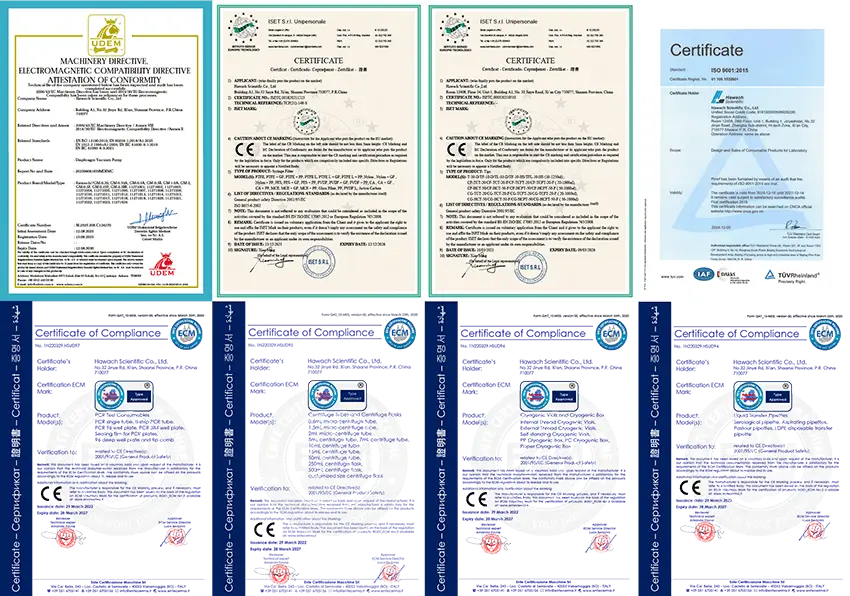

The quality has a guarantee

Fast & safe shipping worldwide


