Core advantages: Lowest protein binding | High flow rate | Thermal stability up to 180°C | Low extractables | Naturally hydrophilic | Sterile & non-sterile options
Availability: In Stock


Core advantages: Lowest protein binding | High flow rate | Thermal stability up to 180°C | Low extractables | Naturally hydrophilic | Sterile & non-sterile options
Availability: In Stock
Hydrophilic cellulose acetate membrane with extremely low protein binding, ideal for protein recovery, enzyme filtration, tissue culture media, and clinical analysis.
A cellulose acetate (CA) membrane filter is a hydrophilic microporous filtration medium made from pure cellulose acetate. It is characterized by extremely low protein binding, making it one of the best choices for biological and clinical applications where maximum sample recovery is critical.
CA membranes are naturally hydrophilic and suitable for aqueous and many alcoholic media filtration. They offer an optimal balance of high flow rate, thermal stability, and low adsorption, with a smooth surface and uniform pore structure.
Lowest protein binding – maximizes recovery
Naturally hydrophilic – no pre-wetting needed
High flow rate – superior throughput
Thermal stability up to 180°C
Low extractables – clean, accurate results
Sterile & non-sterile options available
Round disc & roll membrane formats
Wide pore size range: 0.1-5.0µm
CA membrane filters are widely used in applications where protein recovery and sample integrity are paramount:
| Pore Size | Best Use Case |
| 0.1 µm | Fine particle removal, ultra-clean filtration |
| 0.22 µm | Sterilizing filtration of aqueous solutions, buffers, serum, and culture media |
| 0.45 µm | HPLC mobile phase filtration, general laboratory clarification |
| 0.8 µm | Particle removal from biological samples |
| 1.0 – 5.0 µm | Coarse prefiltration, high-particulate-load samples |
| Membrane Type | Key Property | Best Use Case | Limitation |
| CA (Cellulose Acetate) | Lowest protein binding · Hydrophilic | Biological samples, protein recovery, clinical analysis | Limited solvent resistance (not for acetone/DMF) |
| Nitrocellulose (MCE) | Smoother surface, good contrast | Microbiology, particle detection | Higher protein binding than CA |
| PES | High flow, low protein binding | Biological filtration, buffers | Less chemical resistant than PTFE |
| PTFE | Extreme chemical resistance | Solvents, acids, gases | Hydrophobic, expensive |
| PVDF | Balanced performance | Pharma & bioprocess | Higher cost |
| Nylon | Strong, hydrophilic | HPLC, organic solvent filtration | Higher protein binding |
Key insight: Cellulose acetate membranes have the lowest protein binding among common filtration membranes, making them the top choice when maximum protein recovery is required. Compared with MCE, nylon, and PVDF membranes, CA exhibits the lowest adsorption.
| Parameter | Specification |
| Filter Media | Hydrophilic CA (Cellulose Acetate) |
| Pore Sizes | 0.1, 0.22, 0.45, 0.8, 1.0, 3.0, 5.0 µm |
| Diameters | 13, 25, 47, 50, 60, 90, 142, 150, 200, 293, 300 mm |
| Bubble Point (0.22µm) | ≥ 0.31 MPa |
| Bubble Point (0.45µm) | ≥ 0.15 MPa |
| Flow Rate (0.22µm) | ≥ 10 mL/min/cm² @ 1 bar |
| Flow Rate (0.45µm) | ≥ 20 mL/min/cm² @ 1 bar |
| Thickness | 90 – 110 µm |
| pH Range | 3.5 – 8 |
| Max Operating Pressure | 4.2 bar @ 23°C / 1.5 bar @ 85°C |
| Thermal Stability | Up to 180°C |
Scanning Electron Miscroscope Picture

Available in a wide range of pore sizes and diameters. Below is a partial listing – contact us for complete specifications and custom sizes.
| Item Code | Description | Package(pcs/pk) |
| 11177201 | 0.22(μm), 13(mm) | 400 |
| 11177202 | 0.22(μm), 25(mm) | 200 |
| 11177203 | 0.22(μm), 47(mm) | 100 |
| 11177204 | 0.22(μm), 50(mm) | 100 |
| 11177205 | 0.22(μm), 60(mm) | 50 |
| 11177206 | 0.22(μm), 90(mm) | 50 |
| 11177207 | 0.22(μm), 142(mm) | 50 |
| 11177210 | 0.22(μm), 293(mm) | 50 |
| 11177212 | 0.45(μm), 13(mm) | 400 |
| 11177213 | 0.45(μm), 25(mm) | 200 |
| 11177214 | 0.45(μm), 47(mm) | 100 |
| 11177215 | 0.45(μm), 50(mm) | 100 |
| 11177216 | 0.45(μm), 60(mm) | 50 |
| 11177217 | 0.45(μm), 90(mm) | 50 |
| 11177218 | 0.45(μm), 142(mm) | 50 |
| 11177221 | 0.45(μm), 293(mm) | 50 |
| 11177223 | 0.8(μm), 13(mm) | 400 |
| 11177224 | 0.8(μm), 25(mm) | 200 |
| 11177225 | 0.8(μm), 47(mm) | 100 |
| 11177226 | 0.8(μm), 50(mm) | 100 |
| 11177227 | 0.8(μm), 60(mm) | 50 |
| 11177228 | 0.8(μm), 90(mm) | 50 |
| 11177229 | 0.8(μm), 142(mm) | 50 |
| 11177232 | 0.8(μm), 293(mm) | 50 |
| 11177234 | 5.0(μm), 13(mm) | 400 |
| 11177235 | 5.0(μm), 25(mm) | 200 |
| 11177236 | 5.0(μm), 47(mm) | 100 |
| 11177237 | 5.0(μm), 50(mm) | 100 |
| 11177238 | 5.0(μm), 60(mm) | 50 |
| 11177239 | 5.0(μm), 90(mm) | 50 |
| 11177240 | 5.0(μm), 142(mm) | 50 |
Custom diameters and sterile options available upon request.
Download PDF Datasheet
CA membranes are the preferred choice for biological and clinical applications for several reasons:
Application Highlight – Protein Recovery in Clinical Analysis
In diagnostic laboratories, CA membrane filters are used to maximize recovery of target proteins from biological samples. Their low protein binding ensures that valuable analytes are not lost during filtration, leading to more accurate test results.
| Chemical Type | Compatibility | Notes |
| Aqueous solutions | Excellent | Naturally hydrophilic |
| Low molecular weight alcohols | Good | Ethanol, IPA, methanol |
| Common HPLC solvents | Good | Stable against DMSO |
| Aggressive organic solvents | Limited | Not suitable for acetone, DMF, THF |
| Strong acids / bases | Limited | pH range 3.5-8 |
Need the full technical datasheet?
Get detailed specifications, chemical compatibility charts, and dimensional drawings.
CA membrane filters are used for filtration of aqueous solutions, protein and enzyme filtration, biological and clinical analysis, and tissue culture media sterilization.
Yes, CA membranes are naturally hydrophilic, making them ideal for aqueous and many alcoholic media filtration.
Yes, CA membranes exhibit very low protein binding, which minimizes sample loss and maximizes protein recovery.
CA membranes have lower protein binding and better chemical resistance than nitrocellulose. Mixed Cellulose Ester (MCE) combines both and has a smoother, more uniform surface.
CA membranes have good resistance to low molecular weight alcohols and many common HPLC solvents, but are not suitable for aggressive organic solvents like acetone or DMF.
For sterilizing filtration of aqueous solutions, buffers, serum, and culture media, use 0.22 µm CA membrane filters.
Cellulose acetate membranes are thermally stable up to 180°C, making them suitable for hot liquid and hot gas filtration.
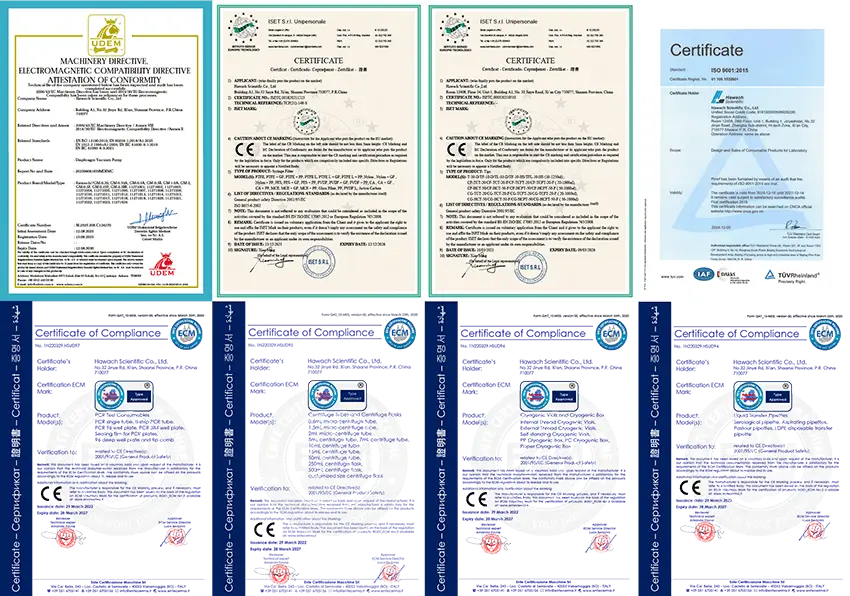

The quality has a guarantee

Fast & safe shipping worldwide


