Grade-43
Equivalent to Whatman Grade 43
Particle Retention: 16μm
Product Appearance: Smooth
Filtration Speed: Medium to Fast
Ash Content(%): <0.01
Thickness(μm): 220
Basis Weight(g/m²): 96
Wet Burst(psi): 0.6
Availability: In Stock


Grade-43
Equivalent to Whatman Grade 43
Particle Retention: 16μm
Product Appearance: Smooth
Filtration Speed: Medium to Fast
Ash Content(%): <0.01
Thickness(μm): 220
Basis Weight(g/m²): 96
Wet Burst(psi): 0.6
Availability: In Stock
When laboratory workflows need both speed and acceptable quantitative accuracy
In routine analytical laboratories, filtration is often constrained by two competing factors: filtration speed and particle retention accuracy.
Filter Paper Grade 43 is designed as a practical balance between fine-retention quantitative grades (Grade 42 / Grade 40) and high-throughput filtration media (Grade 41). It delivers sufficient analytical reliability while significantly improving processing speed for everyday laboratory workflows.
Filter Paper Grade 43 is an ashless quantitative cellulose filter paper manufactured from high-purity cotton linters under controlled production conditions.
From a laboratory classification perspective, it belongs to: medium-fast flow ashless quantitative filtration media.
It is designed for workflows where:
With a nominal retention of approximately 16 µm, Grade 43 sits between Grade 40 (~8 µm) and Grade 41 (~20 µm), offering a balanced position in the quantitative filter paper series.
In practical laboratory environments, filter paper performance is evaluated by operational efficiency and acceptable analytical trade-offs rather than specification alone.
Grade 43 retains most routine suspended solids while allowing faster flow compared to fine-retention grades.
Compared with slower quantitative grades, it significantly reduces filtration time in routine and high-volume workflows.
Low ash content ensures weighing accuracy is maintained in standard quantitative analysis without introducing measurable bias.
Grade 43 is selected because it provides a practical balance between analytical precision and operational speed.
| Application Area | Typical Usage |
| Food & soil analysis | Routine solid-liquid separation with moderate precision requirements |
| Environmental monitoring | Suspended solids testing, routine water analysis |
| Industrial quality control | Cement, mining, metallurgy sample filtration |
| Instrumental pre-filtration | ICP / ICP-MS / AAS sample preparation (particulate reduction) |
In these workflows, Grade 43 becomes a cost-effective and high-efficiency quantitative filtration standard.
| Parameter | Specification |
| Filter Type | Ashless quantitative cellulose filter paper |
| Particle Retention (nominal) | ~16 µm |
| Filtration Speed | Medium to fast |
| Ash Content | ≤ 0.01% |
| Material | High-purity cotton linters cellulose |
| Thickness | ~220 µm |
| Basis Weight | ~96 g/m² |
| Functional Role | Balanced quantitative filtration medium |
| Observed Issue | Recommended Action |
| Filtration too slow, affecting throughput | Switch to Grade 41 or coarser grades |
| Particle breakthrough, low analytical accuracy | Upgrade to Grade 42 or finer grades |
| Need balanced speed and accuracy | Grade 43 becomes preferred baseline |
Grade 43 is the optimal compromise for laboratories that require both operational efficiency and acceptable quantitative accuracy.
Grade 43 is widely used in workflows where:
In practical laboratory systems, Grade 43 is considered a workflow optimization filter paper rather than a high-resolution analytical barrier.
| Manufacturer | Equivalent Grade |
| Hawach | Grade 43 |
| Whatman | Grade 43 |
| Advantec | No. 392 / 00A |
| Munktell | 392 / 00A |
| Ahlstrom | 75 |
| Macherey-Nagel | 640md |
| Cat# | Description | Equivalent to Whatman | Package(pcs/pk) |
| 22011219 | Grade 43, Medium to fast, 16um, 70mm | 1443-070 | 100pcs/pk |
| 22011220 | Grade 43, Medium to fast, 16um, 90mm | 1443-090 | 100pcs/pk |
| 22011221 | Grade 43, Medium to fast, 16um, 110mm | 1443-110 | 100pcs/pk |
| 22011222 | Grade 43, Medium to fast, 16um, 125mm | 1443-125 | 100pcs/pk |
| 22011223 | Grade 43, Medium to fast, 16um, 150mm | 1443-150 | 100pcs/pk |
| 22011224 | Grade 43, Medium to fast, 16um, 180mm | – | 100pcs/pk |
Grade 43 offers faster filtration than Grade 40 while providing better particle retention than Grade 41, making it ideal for balanced workflows.
Yes, for routine gravimetric analysis where ultra-fine particle retention is not required.
Yes. It is widely used for pre-filtration to reduce particulate load before instrumental analysis.
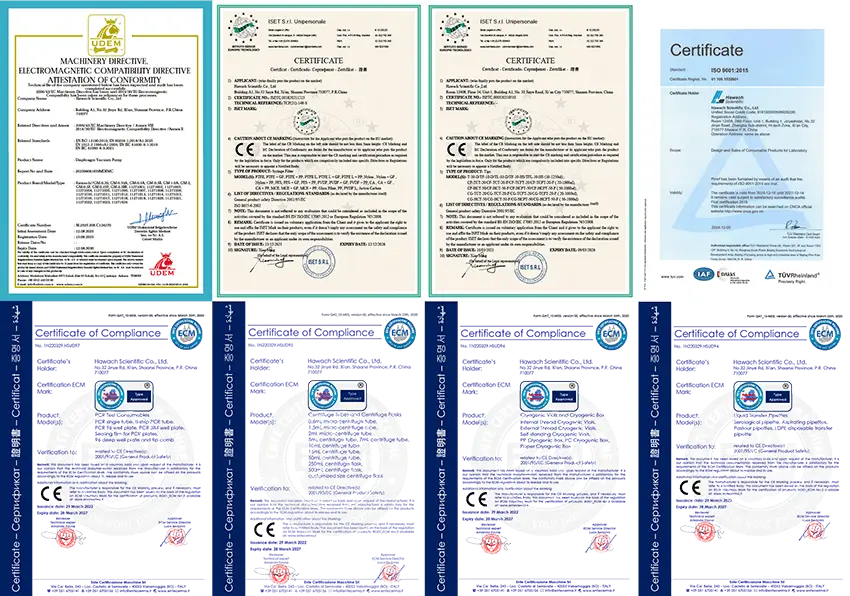

The quality has a guarantee

Fast & safe shipping worldwide


