Core advantages: Chemical resistance | Mechanical durability | Low extractables | Cost efficiency | Extends downstream filter lifetime by 3-5×
Availability: In Stock


Core advantages: Chemical resistance | Mechanical durability | Low extractables | Cost efficiency | Extends downstream filter lifetime by 3-5×
Availability: In Stock
High-strength microporous membrane for industrial prefiltration, laboratory clarification, and chemical-resistant liquid processing. Serves as a protective prefilter layer in multi-stage systems.
A PP membrane filter is a thermally bonded microporous polypropylene structure that operates via surface filtration – particles larger than the pore size are retained on the surface, preventing clogging of downstream filters. Its key advantage lies in the combination of high chemical resistance, mechanical durability, low extractables, and cost efficiency.
Filtration type: Surface filtration
Material: Polypropylene (PP)
Structure: Microporous thermoplastic
Function: Prefiltration / protection layer
Max temp: ~80°C (continuous)
Chemical resistance: Acids, bases, alcohols, organics
Extractables: Very low
| Type | Function Role | Strength | Limitation |
| PP | Prefiltration / protection | Low cost + chemical resistance | Not sterilizing-grade |
| PES | Biological filtration | High flow rate | Lower solvent resistance |
| PTFE | Solvent & gas filtration | Extreme chemical resistance | Hydrophobic, expensive |
| PVDF | Pharma filtration | Balanced performance | Higher cost |
| Nylon | HPLC & solvent prep | Strong + hydrophilic | Protein binding |
Explore our full range: PTFE, PES, PVDF, and Nylon membrane filters.
| Chemical Type | Compatibility |
| Acids (HCl, H₂SO₄) | Excellent |
| Bases (NaOH, KOH) | Excellent |
| Alcohols (EtOH, IPA) | Good |
| Hydrocarbons | Moderate |
| Strong oxidizers | Limited |
All pore sizes are available in the following diameters (packaging quantities per pack):
| Pore Size | 13 mm | 25 mm | 47 mm | 50 mm | 60 mm | 90 mm | 142 mm | 293 mm |
| 0.22 µm | 400/pk | 200/pk | 100/pk | 100/pk | 50/pk | 50/pk | 50/pk | 50/pk |
| 0.45 µm | 400/pk | 200/pk | 100/pk | 100/pk | 50/pk | 50/pk | 50/pk | 50/pk |
| 1.0 µm | 400/pk | 200/pk | 100/pk | 100/pk | 50/pk | 50/pk | 50/pk | 50/pk |
| 5.0 µm | 400/pk | 200/pk | 100/pk | 100/pk | 50/pk | 50/pk | 50/pk | 50/pk |
Quantities may vary for custom orders. Contact us for bulk pricing.
In multi-stage filtration systems, PP membranes act as a front-line barrier, removing high-load particulate matter before it reaches fine membranes. This design significantly:
If your priority is:
Need the full technical datasheet?
Get detailed specifications, chemical compatibility charts, and dimensional drawings.
Download PDF Datasheet
It is used for prefiltration, clarification, and protection of downstream fine filters in laboratory and industrial processes.
Yes, polypropylene is naturally hydrophobic but can be surface-treated for specific applications.
Yes, it has good resistance to many organic solvents, acids, and bases.
PP is cost-effective and general-purpose, while PTFE is used for aggressive chemicals and gas filtration.
PP is cheaper and more chemically resistant; nylon is more suitable for analytical filtration (HPLC).
To reduce particle load and extend downstream membrane lifespan by up to 3-5 times, lowering total operational cost.
Scanning Electron Microscope Picture

| Item Code | Description | Package(pcs/pk) |
| 11207101 | 0.22(μm), 13(mm) | 400 |
| 11207102 | 0.22(μm), 25(mm) | 200 |
| 11207103 | 0.22(μm), 47(mm) | 100 |
| 11207104 | 0.22(μm), 50(mm) | 100 |
| 11207105 | 0.22(μm), 60(mm) | 50 |
| 11207106 | 0.22(μm), 90(mm) | 50 |
| 11207109 | 0.22(μm), 142(mm) | 50 |
| 11207113 | 0.22(μm), 293(mm) | 50 |
| 11207114 | 0.45(μm), 13(mm) | 400 |
| 11207115 | 0.45(μm), 25(mm) | 200 |
| 11207116 | 0.45(μm), 47(mm) | 100 |
| 11207117 | 0.45(μm), 50(mm) | 100 |
| 11207118 | 0.45(μm), 60(mm) | 50 |
| 11207119 | 0.45(μm), 90(mm) | 50 |
| 11207122 | 0.45(μm), 142(mm) | 50 |
| 11207126 | 0.45(μm), 293(mm) | 50 |
| 11207127 | 1.0(μm), 13(mm) | 400 |
| 11207128 | 1.0(μm), 25(mm) | 200 |
| 11207129 | 1.0(μm), 47(mm) | 100 |
| 11207130 | 1.0(μm), 50(mm) | 100 |
| 11207131 | 1.0(μm), 60(mm) | 50 |
| 11207132 | 1.0(μm), 90(mm) | 50 |
| 11207135 | 1.0(μm), 142(mm) | 50 |
| 11207139 | 1.0(μm), 293(mm) | 50 |
| 11207140 | 5.0(μm), 13(mm) | 400 |
| 11207141 | 5.0(μm), 25(mm) | 200 |
| 11207142 | 5.0(μm), 47(mm) | 100 |
| 11207143 | 5.0(μm), 50(mm) | 100 |
| 11207144 | 5.0(μm), 60(mm) | 50 |
| 11207145 | 5.0(μm), 90(mm) | 50 |
| 11207148 | 5.0(μm), 142(mm) | 50 |
| 11207152 | 5.0(μm), 293(mm) | 50 |
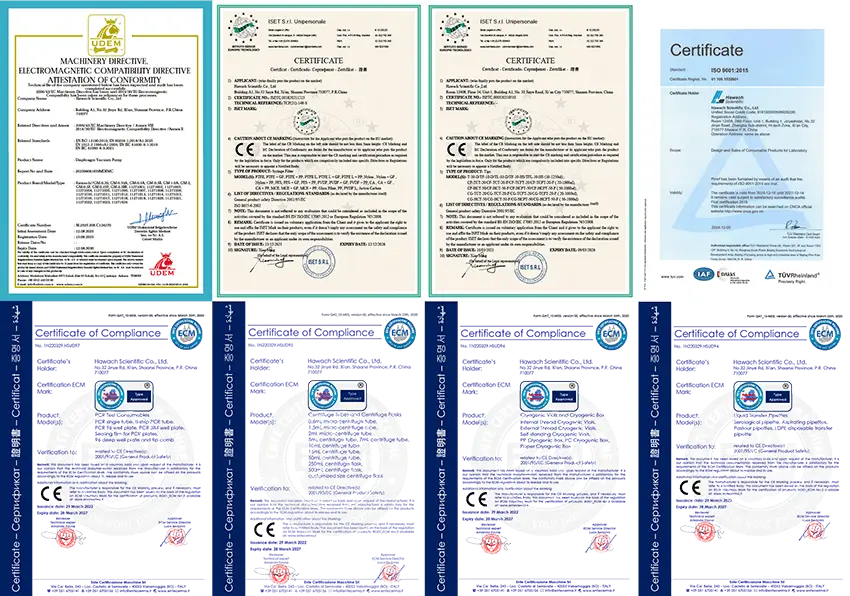

The quality has a guarantee

Fast & safe shipping worldwide


