Material: nichrome
100pcs/tube, 100 tubes/carton
Availability: In Stock


Material: nichrome
100pcs/tube, 100 tubes/carton
Availability: In Stock
Nichrome Reusable Wire for Colony Picking, Stab Culture & Microbial Transfer
An inoculating wire is a microbiology laboratory instrument used for precise handling and transfer of microorganisms such as bacteria and fungi under sterile conditions.
It is designed for targeted inoculation into culture media, especially where penetration, precision, and minimal sample dispersion are required.
Hawach inoculating wires are manufactured from high-quality nichrome alloy, providing excellent heat resistance, mechanical stability, and compatibility with repeated flame sterilization.
An inoculating wire is a straight, metal-based microbiology tool used to transfer microorganisms from one culture medium to another.
Unlike loop tools used for surface streaking, the wire is optimized for point transfer and penetration into agar media, making it ideal for stab culture and colony-level manipulation.
The wire functions through direct contact transfer, where microorganisms are picked up at the tip and placed into a specific location within or on culture media.
Because the structure is rigid and narrow, it allows controlled penetration into agar without spreading organisms across the surface.
This makes it particularly suitable for deep inoculation techniques and single colony selection workflows.
Inoculating wires are widely used in laboratory microbiology for:
These applications make it a standard tool in diagnostic, pharmaceutical, and biotechnology laboratories.
Nichrome alloy is used due to its excellent resistance to high temperatures and oxidation.
It maintains structural integrity even after repeated exposure to flame sterilization, making it suitable for long-term laboratory use.
Key material advantages include:
The straight wire structure provides:
This makes it especially effective for targeted microbial placement rather than surface distribution.
| Feature | Inoculating Wire | Inoculating Loop |
| Shape | Straight tip | Circular loop |
| Function | Picking & stab inoculation | Streaking & spreading |
| Sample behavior | Point transfer | Surface dilution |
| Best use | Targeted inoculation | Colony isolation |
Summary:
Wire tools are used for precision and penetration, while loop tools are used for surface distribution and dilution.
In microbiology, the terms “wire” and “needle” are often used interchangeably. However, in practical laboratory classification:
Both are used for colony picking and stab inoculation, depending on laboratory workflow requirements.
Inoculating wires are widely used in:
Their reliability and precision make them essential for controlled microbial handling.
Hawach provides high-performance microbiology wires designed for professional laboratory use:
Hawach supports global laboratories and distributors with flexible packaging, bulk supply, and private labeling solutions.
| Cat# | Description | Package |
| 16241001 | Nichrome Wire for Inoculation Rod, Total Length: 55mm | 100pcs/tube, 100 tubes/carton |
It is used for precise microbial transfer, colony picking, and stab inoculation in microbiology laboratories.
A wire is used for point inoculation and penetration, while a loop is used for surface streaking and microbial spreading.
Yes, nichrome inoculating wires are reusable and can be sterilized repeatedly using flame sterilization.
They are typically made from nichrome alloy due to its heat resistance and durability.
Nichrome can withstand high temperatures without deformation, making it ideal for repeated sterilization cycles.
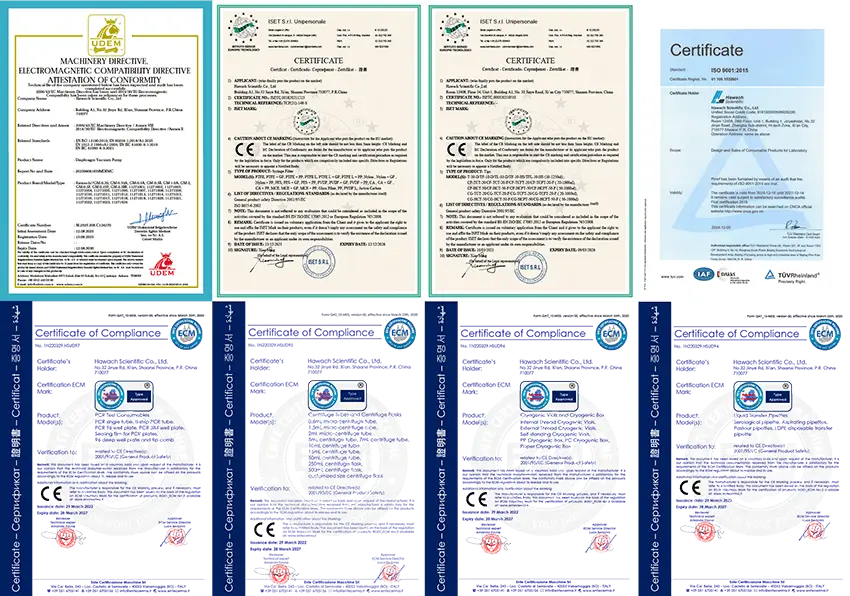

The quality has a guarantee

Fast & safe shipping worldwide


