10-100 rpm adjustable speed
10 min – 99 h 59 min programmable timer
DC motor drive
Modular tray racks
Vertical or horizontal installation
For biotechnology, clinical diagnostics & research lab
Availability: In Stock

10-100 rpm adjustable speed
10 min – 99 h 59 min programmable timer
DC motor drive
Modular tray racks
Vertical or horizontal installation
For biotechnology, clinical diagnostics & research lab
Availability: In Stock
A tube rotator (also known as a rotating mixer or end-over-end mixer) provides gentle, continuous 360° rotation for samples in sealed centrifuge tubes. Designed for workflows commonly performed on tube rotators from Thermo Fisher, Benchmark Scientific, DLAB and Labnet. Ideal for immunoprecipitation, protein binding, nucleic acid extraction, blood mixing, cell suspension mixing, hybridization, Western blot sample preparation, bead-based assays, and NGS sample preparation.
| Tube Size | Recommended Rack (Cat#) | Orientation | Capacity | Best For |
| 1.5 mL / 2.0 mL | 18101112 (vertical) / 18101113 (horizontal) | Vertical / Horizontal | 44 / 40 tubes | Microtube mixing, PCR prep, IP, DNA extraction |
| 5 mL | 18101114 (vertical) / 18101115 (horizontal) | Vertical / Horizontal | 32 / 40 tubes | Small volume biological samples |
| 10 mL / 15 mL | 18101116 (vertical) / 18101117 (horizontal) | Vertical / Horizontal | 12 / 16 tubes | Blood mixing, clinical samples, protein assays |
| 50 mL | 18101118 (vertical) / 18101119 (horizontal) | Vertical / Horizontal | 12 / 16 tubes | Large-volume extraction, IP, protein purification |
Not sure which rack orientation or configuration fits your protocol? Email info@hawach.com with your tube type and application – we will recommend the best setup.
A tube rotator is a laboratory mixer that rotates sample tubes continuously through a 360° end-over-end motion to keep suspensions, blood samples, protein solutions, and cell cultures uniformly mixed. Unlike vortex mixers that create high shear forces, tube rotators provide gentle mixing suitable for sensitive biological samples – essential for immunoprecipitation, blood anticoagulation, and protein binding studies.
The tube rotator (rotating mixer) is a laboratory mixing device designed for gentle, continuous end-over-end rotation of sample tubes. Powered by a DC motor with microcomputer control, it provides stable speed regulation, low noise, and reliable long-term operation. The modular tray system accommodates interchangeable double-sided racks for 1.5 mL, 2.0 mL, 5 mL, 10 mL, 15 mL, and 50 mL centrifuge tubes. Combined rotation + inversion + programmable pause cycles ensure uniform mixing without damaging sensitive biological samples.
| Catalog No. | Description | Speed Range | Timer Range | Power |
| 18101003 | Tube Rotator Main Unit | 10-100 rpm | 10 min – 99 h 59 min | 25 W |
| Cat# | Tube Size | Orientation | Capacity |
| 18101112 | 1.5 mL / 2.0 mL | Vertical | 44 tubes |
| 18101113 | 1.5 mL / 2.0 mL | Horizontal | 40 tubes |
| 18101114 | 5 mL | Vertical | 32 tubes |
| 18101115 | 5 mL | Horizontal | 40 tubes |
| 18101116 | 10 mL / 15 mL | Vertical | 12 tubes |
| 18101117 | 10 mL / 15 mL | Horizontal | 16 tubes |
| 18101118 | 50 mL | Vertical | 12 tubes |
| 18101119 | 50 mL | Horizontal | 16 tubes |
Select the appropriate speed and orientation based on your sample type for optimal mixing performance.
| Sample Type | Recommended Speed (rpm) | Preferred Orientation | Typical Application |
| Blood Samples | 20-50 rpm | Horizontal | Anticoagulation, plasma preparation |
| Antibody-Bead Suspension | 10-30 rpm | Vertical | Immunoprecipitation (IP), Co-IP |
| Protein Lysate | 10-40 rpm | Vertical / Horizontal | Protein binding, pull-down assays |
| DNA/RNA Extraction | 20-60 rpm | Vertical | Spin-column binding, washing steps |
| Cell Suspension | 10-30 rpm | Horizontal | Gentle resuspension, viability preservation |
| Magnetic Beads | 10-30 rpm | Vertical | Bead-based assays, NGS library prep |
| Feature | Tube Rotator | Roller Mixer |
| Motion | 360° end-over-end rotation | Horizontal rolling |
| Sample Type | Protein solutions, DNA extracts, blood, cell suspensions | Blood tubes, viscous liquids |
| Mixing Intensity | Gentle, low shear | Moderate |
| Typical Speed | 10-100 rpm | 20-80 rpm |
| Best For | Immunoprecipitation, protein binding, DNA extraction | Blood tube anticoagulation, viscous liquid mixing |
A: A tube rotator provides slow, continuous end-over-end mixing for sensitive samples (immunoprecipitation, blood mixing, protein binding). A vortex mixer creates rapid circular agitation and is typically used for quick resuspension or homogenisation. Tube rotators are preferred for long-duration, gentle mixing; vortex mixers are best for instant, high-intensity mixing of single tubes.
Yes. They are designed for workflows commonly performed on leading brands. No method revalidation required for most validated protocols.
A tube rotator rotates tubes end-over-end (360°), suitable for immunoprecipitation, protein binding, and nucleic acid extraction. A roller mixer rolls tubes horizontally, better for blood tube anticoagulation and viscous liquids. See comparison table above.
1.5 mL, 2.0 mL, 5 mL, 10 mL, 15 mL, and 50 mL centrifuge tubes. Interchangeable racks allow quick switching between sizes.
Yes. The timer supports up to 99 hours 59 minutes – perfect for unattended overnight mixing or extended protocols.
10-30 rpm with vertical orientation is recommended for gentle mixing of antibody-bead suspensions.
Yes, using multiple racks on the same unit. Each rack holds one tube size, but the unit can accept different racks simultaneously.
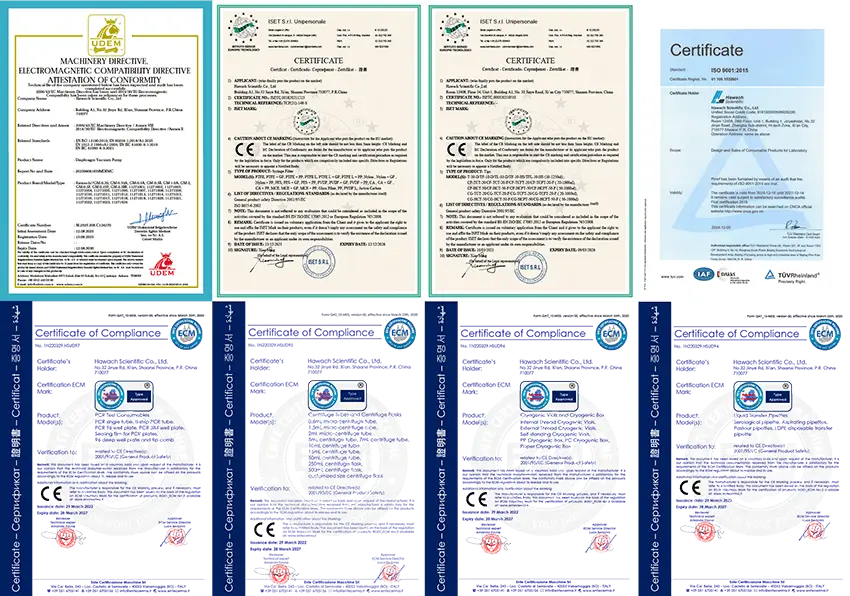

The quality has a guarantee

Fast & safe shipping worldwide


