Grade: BIO-40
Equivalent to Whatman Grade 40
Particle Retention: 8.0μm
Product Appearance: Smooth
Filtration Speed: Medium
Ash Content(%): < 0.01
Thickness(μm): 210
Basis Weight(g/m2): 92
Wet Burst(psi): 0.5
Availability: In Stock


Grade: BIO-40
Equivalent to Whatman Grade 40
Particle Retention: 8.0μm
Product Appearance: Smooth
Filtration Speed: Medium
Ash Content(%): < 0.01
Thickness(μm): 210
Basis Weight(g/m2): 92
Wet Burst(psi): 0.5
Availability: In Stock
In gravimetric and quantitative laboratory workflows, most deviations do not originate from instrumentation.
They originate from a much less visible source:
sample preparation inconsistency during filtration
In practice, laboratories often discover that filter paper selection does not only affect speed—it directly influences final reported mass accuracy.
This is where Grade 40 is typically positioned:
not as the fastest option, and not as the finest—but as the most stable baseline for repeatable quantitative filtration.
Filter Paper Grade 40 is an ashless quantitative cellulose filter paper manufactured from high-purity cotton linters under controlled production conditions.
From a laboratory classification perspective, it belongs to:
medium-retention ashless quantitative filtration media
It is designed for workflows where:
With approximately 8 µm nominal retention, it sits in the central working range of quantitative laboratory filtration systems.
In real laboratory environments, filter paper performance is not evaluated by specification alone.
It is evaluated by error behavior under real samples.
Fine particles pass through the filter medium, leading to underestimation of residue mass in gravimetric analysis.
Overly fine media slow filtration significantly, especially in soil or wastewater samples with high solid load.
Inaccurate or high-ash media introduce non-sample mass after ignition, affecting final weighing accuracy.
Grade 40 is selected because it minimizes all three error types simultaneously within routine analytical conditions.
In practice, most laboratories do not begin with Grade 40.
They converge toward it after workflow instability appears.
In these scenarios, Grade 40 becomes the “stability reference point” that restores balance between accuracy and operational efficiency.
| Parameter | Specification |
| Filter Type | Ashless quantitative cellulose filter paper |
| Particle Retention | ~8 µm |
| Filtration Speed | Medium |
| Ash Content | ≤ 0.01% |
| Material | High-purity cotton linters cellulose |
| Thickness | ~210 µm |
| Basis Weight | ~95 g/m² |
| Functional Role | Gravimetric quantitative filtration medium |
Grade 40 is used in workflows where analytical reproducibility is critical under variable sample matrices:
In real practice, filter paper selection follows workflow behavior rather than specification comparison:
Grade 40 is commonly selected in analytical workflows requiring:
In gravimetric chemistry, even small deviations in filtration behavior can propagate into significant final mass errors.
This is why filter media selection is considered a method-critical variable, not a consumable choice.
| Manufacturer | Equivalent Grade |
| Hawach | Grade 40 |
| Whatman | Grade 40 |
| Advantec | No. 40 |
| Munktell | 390 |
| Ahlstrom | 74 |
| Macherey-Nagel | 640d |
| Cat# | Description | Equivalent to Whatman | Package(pcs/pk) |
| 22011201 | Grade 40, Medium, 8um, 70mm | 1440-070 | 100pcs/pk |
| 22011202 | Grade 40, Medium, 8um, 90mm | 1440-090 | 100pcs/pk |
| 22011203 | Grade 40, Medium, 8um, 110mm | 1440-110 | 100pcs/pk |
| 22011204 | Grade 40, Medium, 8um, 125mm | 1440-125 | 100pcs/pk |
| 22011205 | Grade 40, Medium, 8um, 150mm | 1440-150 | 100pcs/pk |
| 22011206 | Grade 40, Medium, 8um, 180mm | – | 100pcs/pk |
OEM customization and bulk supply are available for laboratory procurement programs and industrial distribution channels.
Download PDF Datasheet
Because it provides a controlled balance between particle retention and filtration speed, minimizing both breakthrough loss and clogging-related variability in mass measurement.
It helps reduce three major errors: particle breakthrough (negative bias), ash residue interference (positive bias), and flow distortion due to clogging.
It is widely used in gravimetric and environmental analytical workflows where ashless quantitative filtration media are required to ensure reproducible results.
Yes. It is commonly used as a pre-filtration medium for ICP, ICP-MS, and AAS sample preparation to protect analytical instruments from particulate contamination.
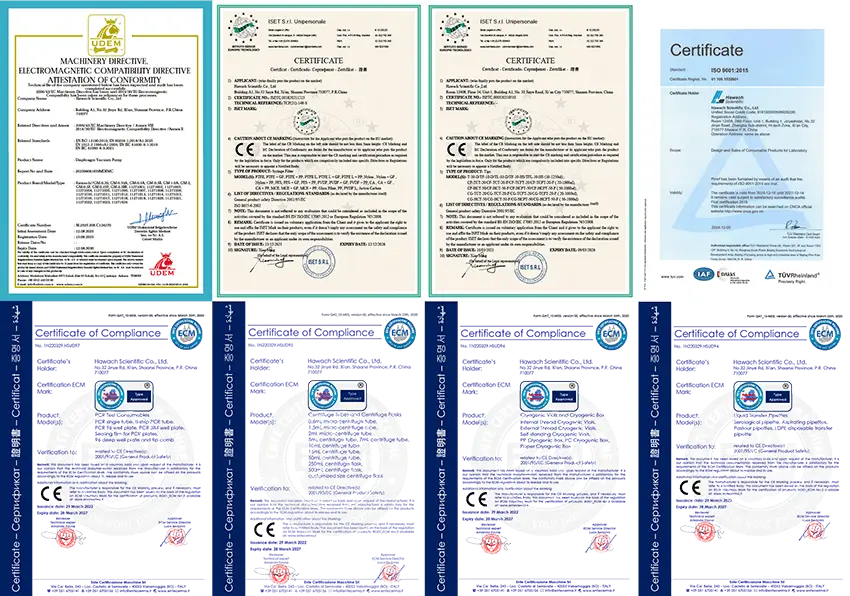

The quality has a guarantee

Fast & safe shipping worldwide


