Grade-44
Equivalent to Whatman Grade 44
Particle Retention: 3μm
Product Appearance: Good
Filtration Speed: Slow
Ash Content(%): < 0.01
Thickness(μm): 176
Basis Weight(g/m2): 77
Wet Burst(psi): 0.4
Availability: In Stock


Grade-44
Equivalent to Whatman Grade 44
Particle Retention: 3μm
Product Appearance: Good
Filtration Speed: Slow
Ash Content(%): < 0.01
Thickness(μm): 176
Basis Weight(g/m2): 77
Wet Burst(psi): 0.4
Availability: In Stock
Ultra-fine quantitative filtration for the most demanding gravimetric accuracy requirements
In quantitative chemical analysis, the most significant source of error is often not the analytical instrument, but the loss or incomplete retention of fine precipitates during filtration. When precipitates are extremely fine or colloidal in nature, even minimal breakthrough can lead to measurable deviations in final gravimetric results.
Filter Paper Grade 44 is engineered for these high-precision conditions, where maximum particle retention is required and filtration speed becomes a secondary consideration. It is specifically optimized for fine precipitates such as barium sulfate (BaSO₄), cuprous oxide (Cu₂O), and metastannic acid systems.
Filter Paper Grade 44 is an ashless quantitative cellulose filter paper manufactured from high-purity cotton linters under tightly controlled production conditions to ensure consistent pore structure, low extractables, and stable filtration behavior.
From a laboratory classification perspective, it belongs to: ultra-fine retention quantitative filtration media designed for high-precision gravimetric workflows.
It is intended for applications where:
Grade 44 is positioned within the quantitative cellulose filter paper series as a high-retention grade designed for fine precipitation systems.
| Grade | Approx. Retention | Filtration Character |
| Grade 41 | ~20 µm | Fast flow, coarse retention |
| Grade 43 | ~16 µm | Balanced flow and retention |
| Grade 40 | ~8 µm | Medium retention, stable gravimetric use |
| Grade 42 | ~2.5 µm | Highest retention, slowest flow |
| Grade 44 | ~3 µm | Optimized ultra-fine retention for specific precipitates |
Grade 44 is not simply defined by pore size alone, but by its optimized retention behavior for specific inorganic precipitation systems where predictable filtration performance is critical.
Certain inorganic precipitates form extremely fine particles that may partially pass through medium-retention filter papers. Grade 44 minimizes this risk by providing enhanced retention stability in such systems.
In gravimetric analysis, even small particle losses can introduce negative bias in final mass determination. Grade 44 helps maintain analytical integrity by ensuring near-complete capture of target precipitates.
Reduced filtration speed is a functional characteristic of high-retention media. This controlled flow ensures improved particle capture efficiency and more stable filtration front behavior.
Grade 44 is typically selected when analytical accuracy requirements exceed routine filtration conditions.
In these scenarios, Grade 44 functions as a precision control filter medium rather than a general-purpose laboratory consumable.
| Parameter | Specification |
| Filter Type | Ashless quantitative cellulose filter paper |
| Nominal Particle Retention | ~3 µm |
| Filtration Speed | Slow |
| Ash Content | ≤ 0.01% |
| Material | High-purity cotton linters cellulose |
| Thickness | ~176 µm |
| Basis Weight | ~77 g/m² |
| Functional Role | Ultra-high retention quantitative filtration medium |
| Observed Requirement | Recommended Grade |
| Particle breakthrough in fine precipitates | Grade 44 |
| Balanced speed and accuracy | Grade 40 / 43 |
| Fast routine filtration | Grade 41 |
| Maximum fine-particle retention (slowest flow) | Grade 42 |
Grade 44 is preferred when precipitate retention stability is more critical than throughput efficiency.
Grade 44 is widely used in workflows where:
It is considered a high-precision analytical barrier medium within quantitative filtration systems.
| Manufacturer | Equivalent Grade |
| Hawach | Grade 44 |
| Whatman | Grade 44 |
| Advantec | 6 / 4A |
| Munktell | 391 |
| Ahlstrom | 95 |
| Macherey-Nagel | 640de |
| Cat# | Description | Equivalent to Whatman | Package(pcs/pk) |
| 22011225 | Grade 44, Slow, 3um, 70mm | 1444-070 | 100pcs/pk |
| 22011226 | Grade 44, Slow, 3um, 90mm | 1444-090 | 100pcs/pk |
| 22011227 | Grade 44, Slow, 3um, 110mm | 1444-110 | 100pcs/pk |
| 22011228 | Grade 44, Slow, 3um, 125mm | 1444-125 | 100pcs/pk |
| 22011229 | Grade 44, Slow, 3um, 150mm | 1444-150 | 100pcs/pk |
| 22011230 | Grade 44, Slow, 3um, 180mm | – | 100pcs/pk |
Because it provides stable high-retention performance for fine inorganic precipitates where gravimetric accuracy is critical.
Grade 44 is optimized for specific fine precipitate systems with slightly higher nominal pore size, while Grade 42 provides maximum retention for broader ultra-fine filtration conditions.
Yes. It is commonly used as a final-stage pre-filtration medium to remove fine particulates before instrumental analysis.
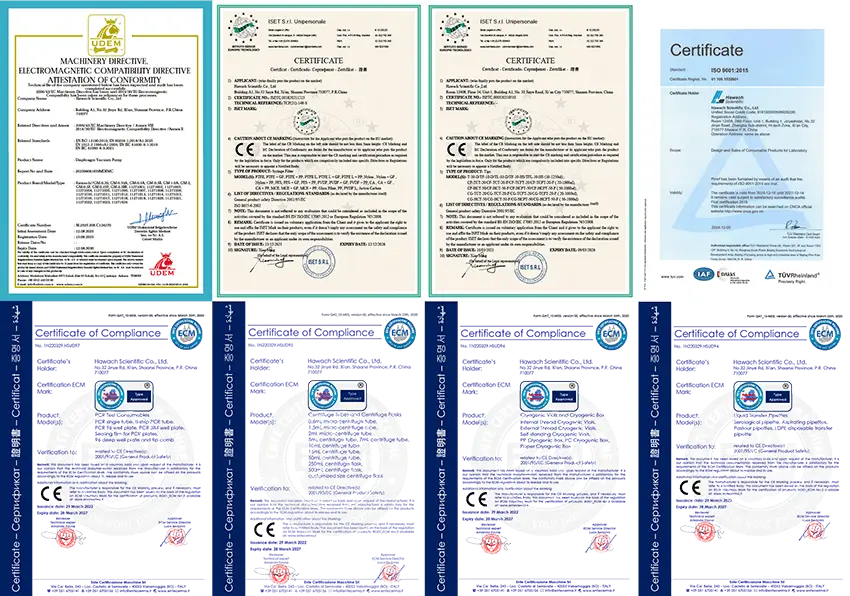

The quality has a guarantee

Fast & safe shipping worldwide


