Propylsulfonic acid bonded silica
40-75 μm
100 Å
Carbon Content: 4.5%
Strong cation exchanger
Minimal hydrophobic interaction
For pyridines, malachite green, crystal violet and weakly basic compounds
Availability: In Stock


Propylsulfonic acid bonded silica
40-75 μm
100 Å
Carbon Content: 4.5%
Strong cation exchanger
Minimal hydrophobic interaction
For pyridines, malachite green, crystal violet and weakly basic compounds
Availability: In Stock
PRS SPE cartridges use propylsulfonic acid bonded silica to provide strong cation exchange retention for weakly basic and positively charged analytes. Unlike conventional benzenesulfonic acid SCX sorbents, PRS phases do not contain aromatic rings, significantly reducing unwanted hydrophobic and π-π secondary interactions.
This difference is especially important for:
Because PRS minimizes non-polar retention, it often provides cleaner extracts, improved recoveries and more selective retention compared with traditional aromatic SCX sorbents.

| Feature | PRS (Propylsulfonic Acid) | Traditional SCX (Benzenesulfonic Acid) |
| Functional Group | Aliphatic propylsulfonic acid | Aromatic benzenesulfonic acid |
| Cation Exchange Strength | Strong | Strong |
| Hydrophobic Interaction | Minimal | Significant |
| π-π Interaction | Very low | High |
| Best For | Weak bases and pyridines | General basic compounds |
| Extract Cleanliness | Higher selectivity and lower background | Broader retention but more matrix interference |
PRS SPE is often selected when conventional SCX SPE cartridges show excessive hydrophobic retention, poor recovery of weak bases or heavy matrix interference.
| Application Area | Typical Analytes |
| Aquaculture residue analysis | Malachite green, leuco malachite green, crystal violet |
| Pharmaceutical analysis | Pyridine-containing drugs, alkaloids, weak bases |
| Clinical & toxicology | Basic drug metabolites in plasma and urine |
| Environmental analysis | Cationic dyes and alkaline contaminants in water |
| Food safety testing | Veterinary drug residues and dye contaminants |
| Parameter | Specification |
| Sorbent | Propylsulfonic acid bonded silica (PRS) |
| Functional Group | -(CH₂)₃-SO₃H |
| Particle Size | 40-75 μm |
| Pore Size | 100 Å |
| Surface Chemistry | Strong cation exchange |
| pKa | <1 (fully ionized under normal SPE conditions) |
| Retention Mechanism | Electrostatic attraction of positively charged analytes |
| Secondary Interactions | Minimal hydrophobic and π-π interaction |
Traditional aromatic SCX sorbents contain benzene rings that contribute additional hydrophobic and π-π retention mechanisms. While useful for some analytes, these secondary interactions can cause excessive retention and incomplete recovery of weakly basic compounds.
PRS phases eliminate these aromatic interactions by using an aliphatic propyl linker. Retention is driven primarily by ionic interaction, making elution more predictable and reducing background interference from hydrophobic matrix compounds.
This is particularly beneficial for:
Because PRS minimizes hydrophobic retention, stronger organic wash conditions can often be used without analyte loss, improving extract cleanliness.
| Cat. No. | Description | Pack |
| 15011105 | PRS SPE, 100 mg / 1 mL | 100 pcs/pk |
| 15011106 | PRS SPE, 200 mg / 3 mL | 50 pcs/pk |
| 15011107 | PRS SPE, 500 mg / 3 mL | 50 pcs/pk |
| 15011108 | PRS SPE, 500 mg / 6 mL | 30 pcs/pk |
| 15011109 | PRS SPE, 1 g / 6 mL | 30 pcs/pk |
| 15011110 | PRS SPE, 1 g / 12 mL | 20 pcs/pk |
| 15011111 | PRS SPE, 2 g / 12 mL | 20 pcs/pk |
Compatible with standard SPE manifolds, positive-pressure systems and automated SPE workstations.
Download PDF Datasheet
PRS uses aliphatic propylsulfonic acid chemistry and minimizes hydrophobic and π-π interactions. Conventional SCX sorbents contain aromatic benzene rings that can cause excessive retention of weak bases.
Pyridine-containing analytes are often affected by aromatic interactions on traditional SCX phases. PRS improves selectivity and recovery by relying primarily on ionic retention.
Yes. PRS SPE is widely used for extraction and cleanup of malachite green, leuco malachite green and crystal violet in aquaculture and environmental testing.
Yes. PRS provides cleaner extracts with reduced matrix interference, making it suitable for LC-MS/MS residue analysis.
Yes. OEM cartridge production, private label packaging and bulk PRS sorbent supply are available for distributors and laboratory manufacturers.
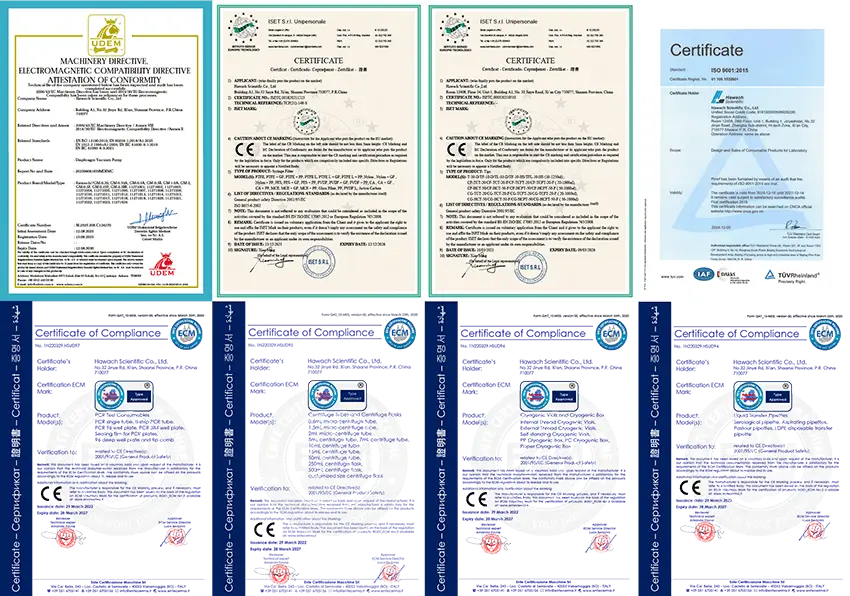

The quality has a guarantee

Fast & safe shipping worldwide


