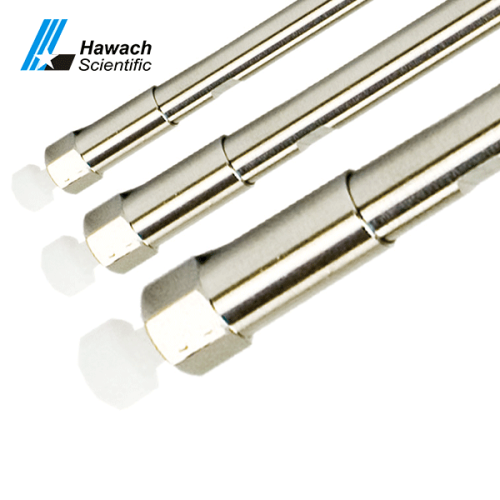
3 μm / 5 μm / 10 μm
120Å
High Carbon Load
Baseline Resolution of 16 EPA Priority PAHs
Availability: In Stock


3 μm / 5 μm / 10 μm
120Å
High Carbon Load
Baseline Resolution of 16 EPA Priority PAHs
Availability: In Stock
A PAH HPLC column is a reversed-phase C18 column engineered for high-resolution separation of polycyclic aromatic hydrocarbons (PAHs), a class of priority environmental pollutants regulated under EPA Method 610.
Unlike conventional C18 columns, PAH-dedicated phases are designed with enhanced bonding density and controlled surface chemistry to improve shape selectivity, enabling baseline separation of all 16 EPA priority PAHs using standard water/acetonitrile gradient conditions.
Hawach PAH HPLC columns are produced from ultra-high purity (>99.999%) fully porous spherical silica, providing high carbon loading, strong retention of planar aromatic compounds, and consistent column efficiency across production batches. Each batch is tested using EPA 610 PAH standard mixtures to ensure reproducible separation performance.
Available particle sizes include 3 μm (fast UHPLC), 5 μm (standard HPLC), and 10 μm (preparative applications). Multiple internal diameters are available, including 2.1 mm ID for LC/MS workflows and 4.6 mm ID for routine environmental analysis.
| Application | Recommended Part No. | Particle Size | ID × Length | Performance Rationale |
| 16 EPA PAHs (routine environmental QC) | 13021008 | 5 μm | 4.6×250 mm | Standard EPA configuration with full baseline resolution |
| Fast analysis / UHPLC workflows | 13021005 | 3 μm | 4.6×250 mm | Higher efficiency, shorter runtime |
| LC/MS PAH profiling | 13021001 / 13021002 | 3 μm | 2.1×100 / 150 mm | Narrow bore for sensitivity and solvent reduction |
| Method development screening | 13021003 | 3 μm | 4.6×150 mm | Balanced resolution and speed |
| Preparative purification | Contact sales | 5-10 μm | 6.0-10.0 mm ID | High loading capacity for isolation workflows |
Recommended standard configuration:
13021008 – 5 μm, 4.6×250 mm for EPA Method 610 routine analysis (in stock, 3-5 day delivery)
| Particle Size | Best Application | Typical Runtime | Pressure Limit |
| 3 μm | UHPLC / LC/MS high throughput | ~15-20 min | ~6000 psi |
| 5 μm | Standard EPA Method 610 HPLC | ~25-35 min | ~4000 psi |
| 10 μm | Preparative purification | Extended | ~2500 psi |
| Parameter | Value |
| Bonded phase | High-density C18 optimized for aromatic selectivity |
| Particle sizes | 3 μm / 5 μm / 10 μm |
| Pore size | 120Å |
| Surface area | ~320 m²/g |
| Carbon load | ~22% |
| pH range | 2.0-8.0 |
| End-capping | Double end-capped |
| Max pressure | ~6000 psi (3 μm), ~4000 psi (5 μm) |
| Temperature limit | ≤60°C |
| Mobile phase | Water / Acetonitrile gradient (EPA Method 610) |
| Detection | UV 254 nm, FLD, LC/MS compatible |
| Cat# | Description | Package(pcs/pk) |
| 13021001 | PAH, 3μm, 120Å, 2.1 x 100 mm | 1 |
| 13021002 | PAH, 3μm, 120Å, 2.1 x 150 mm | 1 |
| 1302100 3 | PAH, 3μm, 120Å, 4.6 x 150 mm | 1 |
| 13021004 | PAH, 3μm, 120Å, 4.6 x 200 mm | 1 |
| 13021005 | PAH, 3μm, 120Å, 4.6 x 250 mm | 1 |
| 13021006 | PAH, 5μm, 120Å, 4.6 x 150 mm | 1 |
| 13021007 | PAH, 5μm, 120Å, 4.6 x 200 mm | 1 |
| 13021008 | PAH, 5μm, 120Å, 4.6 x 250 mm | 1 |
| 13021009 | PAH, 10μm, 120Å, 4.6 x 250 mm | 1 |
| Application Area | Sample Types | Analytical Purpose |
| Environmental monitoring | Water, soil, sediment, air particulates | EPA compliance testing of PAHs |
| Food safety | Smoked foods, oils, seafood | Carcinogenic PAH detection |
| Industrial hygiene | Workplace air, emissions | Exposure monitoring |
| Petrochemical analysis | Crude oil, fuels | Hydrocarbon profiling |
| Pharmaceutical QC | API impurities | Aromatic impurity profiling |
| Research | Toxicology, environmental fate | Mechanistic studies |
PAH separation is driven primarily by π-π interactions between aromatic analytes and the hydrophobic C18 bonded surface.
Key contributing factors:
This results in improved selectivity for structural PAH isomers that are difficult to resolve on conventional C18 phases.
Naphthalene, Acenaphthylene, Acenaphthene, Fluorene, Phenanthrene, Anthracene, Fluoranthene, Pyrene, Benzo[a]anthracene, Chrysene, Benzo[b]fluoranthene, Benzo[k]fluoranthene, Benzo[a]pyrene, Dibenzo[a,h]anthracene, Benzo[g,h,i]perylene, Indeno[1,2,3-c,d]pyrene
| Parameter | Condition |
| Column | 13021008, 5 μm, 4.6×250 mm |
| Mobile phase A | Water |
| Mobile phase B | Acetonitrile |
| Gradient | 50% → 100% B (20-30 min) |
| Flow rate | 1.0 mL/min |
| Column temp | 30°C |
| Detection | UV 254 nm / FLD |
| Runtime | 25-35 min (5 μm) |
Compatible with:
Waters PAH C18
Agilent ZORBAX Eclipse PAH
Restek Pinnacle II PAH
Supelco LC-PAH
Phenomenex Luna PAH
All equivalent systems operate under identical gradient and mobile phase conditions.

This column is designed specifically for EPA Method 610 (priority pollutant PAHs in water) and also supports EPA Method 8310 (solid waste), EPA Method 550 (drinking water), ISO 17993, and DIN 38407-F8.
PAH columns use higher carbon loading (~22% vs ~15-17%), proprietary bonding techniques for enhanced shape selectivity, and are lot-tested with PAH standards to baseline-resolve all 16 EPA priority PAHs. Standard C18 columns may not resolve critical isomer pairs like benzo[b]fluoranthene/benzo[k]fluoranthene.
5 μm (13021008) is the standard for conventional HPLC (≤4000 psi) and EPA compliance. 3 μm provides faster runs and higher resolution, suitable for UHPLC or modern HPLC systems (≥6000 psi). 10 μm is for preparative or high-loading applications.
Yes. It is compatible with the same mobile phase conditions (water/acetonitrile gradient) and dimensions (4.6×250 mm, 5 μm) as these columns.
Yes – use volatile mobile phase buffers (e.g., ammonium formate) instead of non-volatile phosphate buffers. 3 μm, 2.1 mm ID columns (13021001 or 13021002) are recommended for LC/MS to reduce flow rates and improve ionization efficiency.
Yes – guard cartridges (4.6×10 mm, 5 μm) and holders are available for all 4.6 mm ID columns. Guard columns significantly extend analytical column lifetime, especially for complex matrices like soil extracts and wastewater samples.
Yes – Certificate of Analysis (COA) and a test chromatogram showing baseline separation of 16 EPA PAH standards are available upon request before purchase. Email info@hawach.com with the column part number.
For most environmental QC methods, no full revalidation is required. However, we recommend performing a system suitability test (e.g., 5-6 injections of an EPA 610 PAH standard mix) to confirm separation performance under your specific conditions. For regulated methods (e.g., EPA compliance testing, accredited labs), follow your internal change control protocol – typically minor verification with a reference standard is sufficient.
Yes – private labeling, custom packaging, and bulk OEM manufacturing are available with minimum order quantity. Contact our OEM team at info@hawach.com with your specifications.
UV (254 nm) is sufficient for high-concentration PAH analysis. Fluorescence detection (FLD) provides significantly higher sensitivity for most PAHs (ng/L levels). LC/MS is suitable with volatile buffers and 2.1 mm ID columns.
Yes – custom dimensions (10-50 mm ID, non-standard lengths) and 300Å pore size are available with minimum order quantity. Contact OEM team.
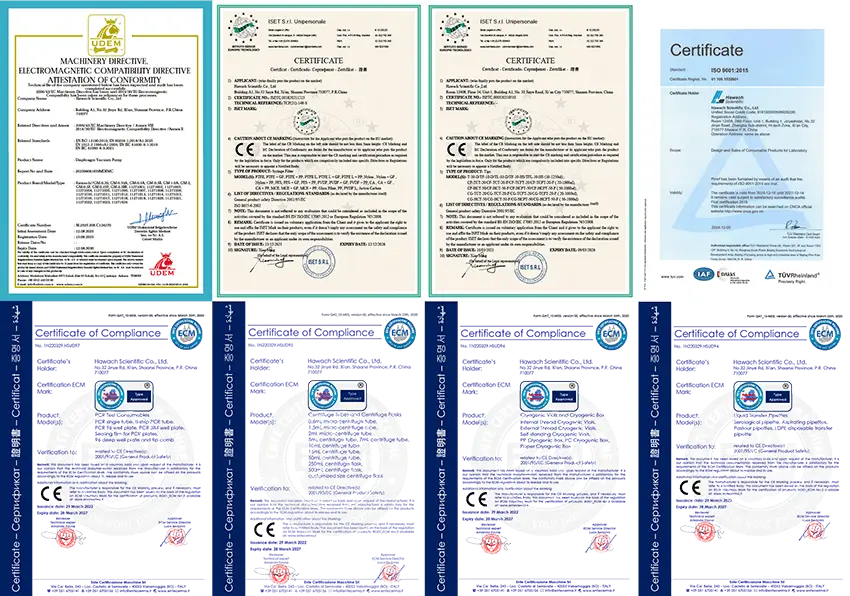

The quality has a guarantee

Fast & safe shipping worldwide