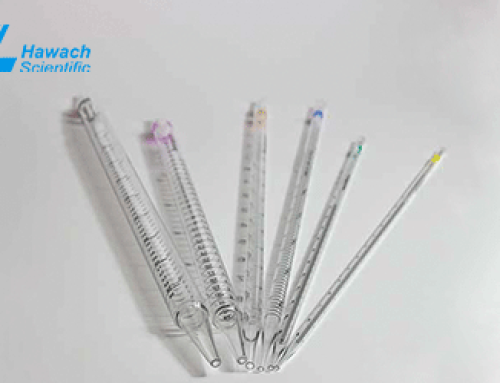
The Importance of Matching Pipettes and Tips
The importance of the match with pipettes and tips
As an indispensable experimental instrument, the pipette plays an important role in biological research, and its tips are used in a huge number of experiments. Hawach related products include sterile filtered pipette tips and no-sterile pipette tips. Pipettes include electronic pipettes and mechanical pipette. We know that if tips and pipettes are not well-matched, the following can happen:

1. Liquid leakage occurs during operation.
When the liquid leakage occurs during the pipetting process, the large-volume pipetting operation can even directly see the liquid drop, the liquid level drops, etc.; Leakage caused by sex will ultimately directly affect the accuracy of pipetting results;
2. The liquid level will be uneven during the pipetting operation of the multichannel pipette
Because the amount of sample sucked by each channel should be the same during the pipetting operation, if the pipette tip is not installed properly, the pressure on the pipette tip in each channel will be inconsistent. resulting in bias. This is also a problem faced by many domestic suction heads. The tips of Rainin pipettes are specially designed for the configuration of Rainin pipettes, which effectively avoids this defect.
3. The mismatch between the tip and the pipette affects the pipetting operation
Whether using a single-channel pipette or a multi-channel pipette, the use of mismatched tips may cause the tips to fall off during the pipetting operation, not only requiring re-pipetting but also the sample may be contaminated, which seriously affects the Experimental efficiency and results.


Use notes of pipettes
What do you need to pay attention to when choosing using pipettes? Today HAWACH will share some points:
1. Determine the suction method and the type of pipette and tip according to the physical properties of the liquid to be transferred.
a. Volatile liquids or liquids with high temperatures resulting in high vapor cannot be pipetted with the built-in piston pipette.
b. For liquids whose temperature is too high or too low, wait until they return to room temperature before pipetting.
Reason: First, to avoid damage to the internal parts of the pipette; secondly, when the liquid temperature is higher than the tip, the volume of the liquid absorbed will be too large. When the liquid temperature is lower than the tip, the suctioned liquid volume will be smaller.
Hot liquids cannot be pipetted with ordinary pipettes. If you are eager to pipette liquid at a low temperature (less than 8°C), be careful not to pre-rinse the pipette tip to reduce errors.
c. Observe the viscosity of the liquid. If the viscosity is large, use reverse suction or choose an external piston pipette; if the viscosity is small, use forward suction.
d. If the liquid contains surfactants or proteins, etc., it is easy to generate foam, and the subsequent operation needs to detect the light absorption value of the liquid, and it is necessary to use reverse suction.
2. Select a pipette with a suitable range to adjust the suction volume.
The selection principle of the pipette range: the target volume is within the range 30%-100% of the maximum range of the pipette. Taking the Ruining pipette as an example, when adjusting the suction volume, open the lock, lay the pipette flat so that the triangular protrusion of the indicating scale is at approximately the same height as the eyes, rotate the adjustment knob to adjust the volume near the target volume first, and then close the lock. button, turn the rotary adjustment knob to adjust to the target volume first. From large to small, it can be directly adjusted to the target scale; from small to large, rotate more than 1/3 of the required volume, and then back to the required range from large to small.
3. Install the tip
First, insert the pipette head vertically downward, hold the gun body tightly, turn it down and left and right, and insert the pipette head tightly. Remember, you cannot use the pipette to repeatedly hit the pipette head to tighten, as it will loosen the parts inside the pipette gun.
4. Check for air leaks
Absorb the liquid, let the pipette stand for 15s, and observe whether the liquid flows out slowly. If it flows out, it means there is air leakage. (Reason: The contact between the pipette tip and the pipette is not tight enough, and the pipette tip needs to be reinserted or the internal air tightness of the pipette gun is poor and needs to be repaired).
5. Maintain proper posture when pipetting; do not hold the pipette tightly at all times, use a pipette with finger hooks to help relieve hand fatigue; change hands frequently if possible.
6. For most pipettes, apply a layer of lubricating oil to the piston before use and after use for a period of time to maintain sealing; for pipettes with conventional ranges, no lubricating oil is also ideal. tightness.