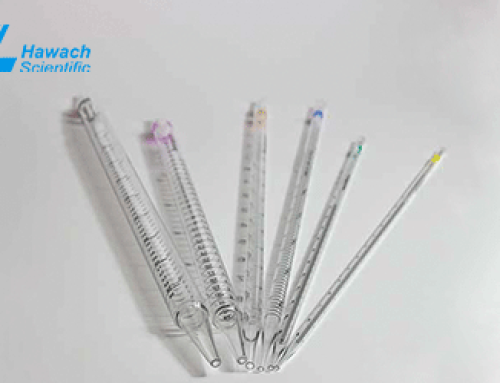
A Brief Introduction of Pipette Filter Tip and Assembly of the Tip
Filter tips are to help avoid cross-contamination. Generally speaking, there is no problem when using filter tips for forwarding pipetting operations. The filter tip is made of medical-grade polypropylene, and the filter element is made of ultra-high molecular weight polyethylene, which has good hydrophobicity and can perfectly block aerosols and prevent fluid and liquid vapor from polluting the interior of the pipette. Hawach’s pipette tips are compatible with almost all the popular brand pipettes and are made for one-time use with a volume ranging from 10ul to 10ml.
Fitting on the end of a pipette and creating an air-tight seal as well, Hawach’s high-quality graduated pipette tips can always fulfill the pipetting needs of your research, diagnostics, and analytical laboratories. The pipette tips play a significant role in the results of an experiment, as they contact the samples directly. It’s also a great help to prevent cross-contamination when you discard the tips between each experimental step.
Hawach’s pipette tips are designed for use in a wide variety of pipetting applications and manufactured in the ultra-clean room for contamination-free products. They guarantee not only accurate pipetting with the perfect airtight grip on the pipette by inner radial rings but perfect sealing and no leaking with the design of a flexible and soft tip cone. You can find that the clean hydrophobic surface of Hawach’s pipette tips ensures not only low retention but increased accuracy and reproducibility at the same time. It’s suitable for handling demanding molecular biology samples such as PCR samples and dealing with dangerous samples such as radioactivity, biological poisoning, corrosiveness, and volatility.
Features of Pipette Filter Tip
(1) The filter element effectively forms a protective structure between the pipette and the sample to ensure the safety of sample aspiration; reduce the hazard of the gas residue and improve experiment repeatability.
(2) It provides low-adsorption and ordinary filter tips, has no coating design, will not pollute the sample, and the surface of the low-adsorption tips is completely hydrophobic.
(3) High temperature and high-pressure sterilization can be used.
(4) Available in both filter and filterless versions. The main purpose of the filter element is to prevent the sample from contaminating the pipette tip.
(5) High-temperature resistance (121℃), all products ensure no pyrogens.
(6) Smooth pipe wall reduces liquid adhesion, environmental protection, and energy conservation.
(7) Gamma-ray sterilization.
(8) The color of the tip of different measuring ranges is different.


Application of Pipette Filter Tip
-Handling of demanding molecular biology samples such as PCR samples
-Handling of dangerous samples such as radioactivity, biological poisoning, corrosiveness, and volatility
-Macromolecular experiments such as cells and viscous DNA
-Protein research experiment
-Experimental study on non-polluting and small samples of viruses
Triple guarantees
Personnel safety guarantee: reduce the spread of harmful samples and protect the health of operators.
Sample safety guarantee: prevent cross-contamination between samples and contamination of internal impurities in the pipette, ensure that the samples meet the requirements of subsequent experiments (no DNase/RNase, no PCR inhibitors, etc.), and minimize sample loss.
Equipment safety guarantee: avoid liquid overshooting into the pipette cavity, maintain the precision and accuracy of pipetting, and extend the service life of the pipette.
Assembly of the Pipette Filter Tip
When putting the tip of the pipette on the pipette, many people will knock a few times on the tip box. This is a wrong approach because this will cause the internal parts of the pipette gun (such as springs) to be instantaneous due to the tapping. The impact force becomes loose and even causes the scale adjustment knob to jam. The correct method is to insert the pipette gun vertically into the tip of the pipette and turn it slightly left and right to make it tightly combined. If it is a multi-channel (such as an 8/12-channel pipette) pipette, you can aim the pipette at the tip of the pipette, then insert it at an angle, and shake it forward and backward to lock it. The sign that the tip is clamped is slightly beyond the O-ring, and you can see that the connecting part forms a clear sealing ring.


Installation of Pipette Tip
In order to better install the pipette tip, there are some tips you can refer to In the process of pipetting liquid, the downward pressure of the thumb must be slowly reduced to make the liquid rise evenly and slowly in the pipette tip.
After the bottom end of the pipette handle enters the tip, if you operate in the tip box, gently press down while shaking the pipette left and right or slightly rotating the pipette (only single-channel pipettes can rotate) 1-2 seconds is enough; if you are using bulk tips, turn the tip slightly for 1-2 seconds while gently applying pressure to the pipette. If this operation fails to achieve the desired seal, you need to check the tip and pipette.
Depth and Angle of aspiration in Pipette Controls
(1) Requirements for the immersion depth of the pipette tip: The depth of aspiration must ensure that the required pipette volume is reached;
The pipette keeps the outer wall of the tip in contact with the liquid as little as possible.
(2) The angle of the pipette: the pipette must always be kept upright during the process of pipetting.